From a Lisbon bica to a Madeiran chinesa, coffee offers a delicious introduction to Portuguese daily life. Learn what to order, what to eat alongside it, and where a simple café stop can take you.
First, Find Your Place at the Counter
Listen before you order. There is the knock of used coffee grounds leaving the filter, the hiss of milk, a saucer landing on stone. Someone has stopped for two minutes before work; someone else has been discussing football for twenty. Across Portugal, the café is less a special outing than a useful extension of home. You need neither an elaborate order nor a grand address to belong.
Begin with “Bom dia” in the morning or “Boa tarde” after midday. At a small neighbourhood café, ordering at the counter is perfectly natural. If you want a terrace table, check whether someone is taking orders there. Payment routines vary: some places ask you to pay immediately, others when you leave. Watch the rhythm, then follow it.
Coffee commonly follows breakfast, lunch and sometimes dinner. After a meal, it usually arrives separately from dessert, unless you ask for them together. Standing at the counter suits a quick stop; sitting over conversation is equally Portuguese. Neither requires rushing your cup.
The Words That Get You the Right Cup
“Um café, por favor” is the most useful sentence in the country: one espresso, please. In Lisbon, you will also hear bica; in Porto, cimbalino remains a traditional name, linked to La Cimbali espresso machines. You do not need to perform the regional vocabulary. Café works almost everywhere, and an ordinary speaking voice works better than a rehearsed flourish.
For a shorter extraction, ask for a café curto. A café cheio fills the little cup more generously, usually with a longer extraction. If you want espresso diluted with hot water rather than more water drawn through the grounds, say so: “Um café com água quente à parte.” An abatanado is generally a longer black coffee in a larger cup, though preparation varies. A duplo means a double espresso; descafeinado means decaffeinated.
Milk introduces another small vocabulary. A pingado is an espresso with a little milk. A garoto is a small, milkier coffee in an espresso cup. Meia de leite comes in a larger cup, with coffee and milk in roughly equal proportions; a galão is a tall glass with proportionally more milk. These are breakfast favourites, especially with a buttered torrada. For plant-based milk, ask what is available rather than assuming every traditional café stocks it.
Lisbon and the Centre: History with Something Sweet
Portugal’s coffee habits grew through overseas trade, including colonial connections with Brazil and African coffee-producing territories. The espresso-centred routine familiar today developed later, particularly during the twentieth century. Lisbon’s A Brasileira, opened in Chiado in 1905 to sell Brazilian coffee, belongs to that story. Its literary associations and decorative interior make it worth seeing, but it is a landmark, not a template for every neighbourhood café.
Order a bica here, then try an everyday pastelaria elsewhere. A pastel de nata brings flaky pastry and warm custard to the bitter little cup. Sugar is usually offered separately with coffee; taste before adding it. There is no requirement to sweeten your espresso, however confidently your neighbour empties a sachet.
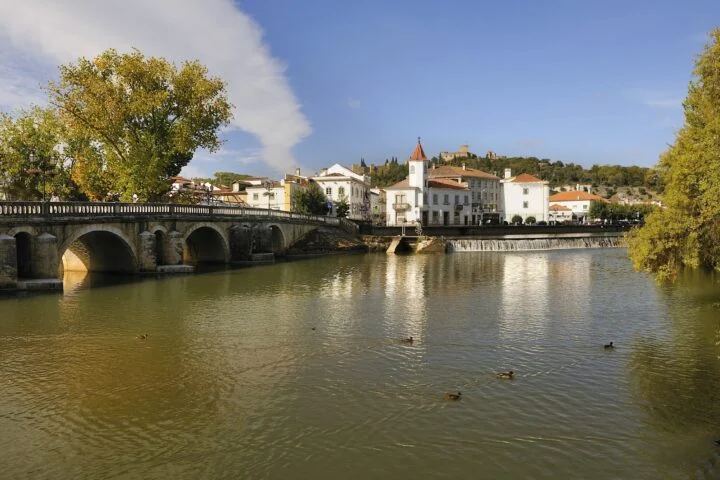
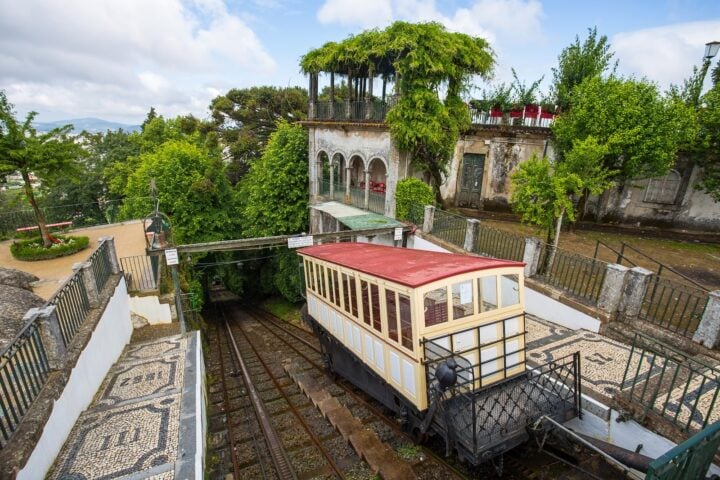
Beyond Lisbon, Coimbra rewards a coffee pause between its steep upper town and the streets below. Look for a pastel de Santa Clara, with egg yolk and almond filling, rather than assuming nata is the only pastry worth knowing. Coimbra is roughly two hours fifteen minutes to two hours forty-five minutes from Lisbon by road in ordinary conditions. It deserves more than a hurried motorway detour.
Browse our travel inspiration for ideas, or tell us what kind of day you have in mind.
Northern Cups, from Porto to the Minho
Porto gives coffee a handsome stage at Café Majestic on Rua de Santa Catarina, opened in 1921. Its mirrors and carved details invite you to look up from your cup. Expect a visitor-heavy landmark rather than the pace of a residential snack bar. For the everyday version, step into a busy confeitaria and order coffee with something from the display.
Farther north, Braga’s Café A Brasileira opened in 1907 and remains a recognisable meeting point in the historic centre. Pair your exploration of the city with a tíbia, an elongated choux pastry filled with cream. Porto to Braga usually takes around fifty minutes to an hour fifteen by road; Guimarães is a similar distance from Porto. Allow extra time for city traffic and parking.
For a northern day combining cafés, churches and wandering, Portugal Magik is a trusted private tour partner in Portugal, travelling in Mercedes-Benz vehicles. A local driver/guide can shape the day around the guests, leaving room for another square or an unexpectedly good pastry rather than treating every stop as a deadline.
Alentejo and Algarve: Let the Day Set the Pace
In Évora, coffee belongs comfortably between a walk through the whitewashed streets and a shaded lunch. Try a pão de rala, the rich local sweet made with almond, egg yolk and sugar, often enclosing sweet fillings. Its intensity makes a small portion quite enough. Lisbon to Évora generally takes about an hour thirty to an hour forty-five by road, before stops or congestion.
In the Algarve, leave time for cafés beyond the beachfront. Loulé’s market streets suit a morning coffee, while Tavira offers riverside tables and quieter lanes nearby. Almond, fig and carob appear throughout the region’s sweet-making traditions. Faro to Loulé takes roughly twenty-five to thirty minutes by road; Faro to Tavira around thirty-five to forty-five. Summer traffic can stretch either journey. In hot weather, ask specifically for ice if that is what you want: an ordinary café still means hot espresso.
The Islands Have Their Own Vocabulary
Madeira adds a pleasing twist. In Funchal, a chinesa commonly means coffee with milk in a larger cup, while a garoto is its small-cup relative. A bica gets you an espresso. Try a slice of bolo de mel, Madeira’s dark sugarcane-honey cake, with its spices and dense crumb. The vocabulary may shift, but the pleasure of a quiet table does not.
In the Azores, order your café with a queijada da Vila from Vila Franca do Campo on São Miguel. From Ponta Delgada, the town is around twenty-five to thirty minutes away by road. On São Jorge, Café Nunes in Fajã dos Vimes is known for locally grown coffee, an unusual Portuguese agricultural story. Reaching that fajã involves winding roads, so plan by your island base rather than the map’s apparent distance. Wherever you finish, “Obrigado” or “Obrigada”, according to the speaker, is the simplest local touch of all.
Plan your own day
Share your dates, group size and interests, and we will suggest a tailored plan with a local driver/guide.