Above the Mondego, Coimbra keeps eight centuries of scholarship close to everyday life. Come for the university, then stay for Romanesque stone, student songs and a table worth lingering over.
Begin with the hill, not the checklist
Coimbra reveals itself vertically. From the Mondego riverbank, houses climb towards a university tower that has measured generations of student life. In the lower town, delivery vans squeeze past cafés and shopkeepers arrange their windows. Higher up, footsteps sound sharper on the stone lanes. You may pass students in black academic capes, but this is no historical stage set. Lectures, exams and hurried lunches carry on behind the grand façades.
I would start early, before the climb becomes warm and the main monuments fill. From Largo da Portagem, follow Rua Ferreira Borges towards the Arco de Almedina, the gateway through the old medieval defences. The lanes beyond rise steeply, sometimes by steps. Wear shoes with a reliable grip, especially after rain. If hills are difficult, arrange a drop-off near the upper town and explore downhill instead. Coimbra rewards walking, but there is no virtue in arriving at its finest rooms already exhausted.
A university older than its Coimbra address
Founded by King Dinis in 1290, Portugal’s university began in Lisbon and moved between the two cities before settling permanently in Coimbra in 1537. That distinction matters: the institution is medieval, but its continuous life here dates from the reign of João III. Its ceremonial heart occupies a former royal palace, linking learning with the city’s earlier role as a seat of Portuguese kings.
Step into the Paço das Escolas and give the view a moment. Beyond the courtyard, roofs fall towards the Mondego and the hills beyond. The university forms part of the University of Coimbra, Alta and Sofia UNESCO World Heritage property, inscribed in 2013. Its story extends beyond this courtyard to the colleges along Rua da Sofia below.
Inside, the Sala dos Capelos, once the palace throne room, remains a setting for academic ceremonies. The Chapel of São Miguel offers a more intimate encounter, with patterned tiles and an ornate organ. Access can change around university events, so check the current visitor arrangements rather than assuming every historic space will be open.
The library deserves your full attention
The Biblioteca Joanina is the room most visitors have pictured before arriving. Built in the eighteenth century under João V, it makes knowledge look almost theatrical: gilded woodwork, painted ceilings and ranks of books gathered into a carefully ordered world. Yet its beauty is inseparable from its original purpose. These were working collections, not decorative props.
There is also a small, rather wonderful practical detail. Bats associated with the library help control insects that could damage the books, while protective covers shield the tables overnight. The care of this place has always required more than admiration.
Book through the university’s official visitor channels, particularly for weekends and busy travel periods. Library entry is timed, and ticket combinations and access conditions can change. Arrive before your allocated slot and follow the photography restrictions. Allow roughly two to three hours for the main university visit, depending on your ticket and interests. That gives you breathing room without pretending you can linger indefinitely inside the library itself.
Browse our travel inspiration for ideas, or tell us what kind of day you have in mind.
Beyond the courtyard, a city with its own rhythm
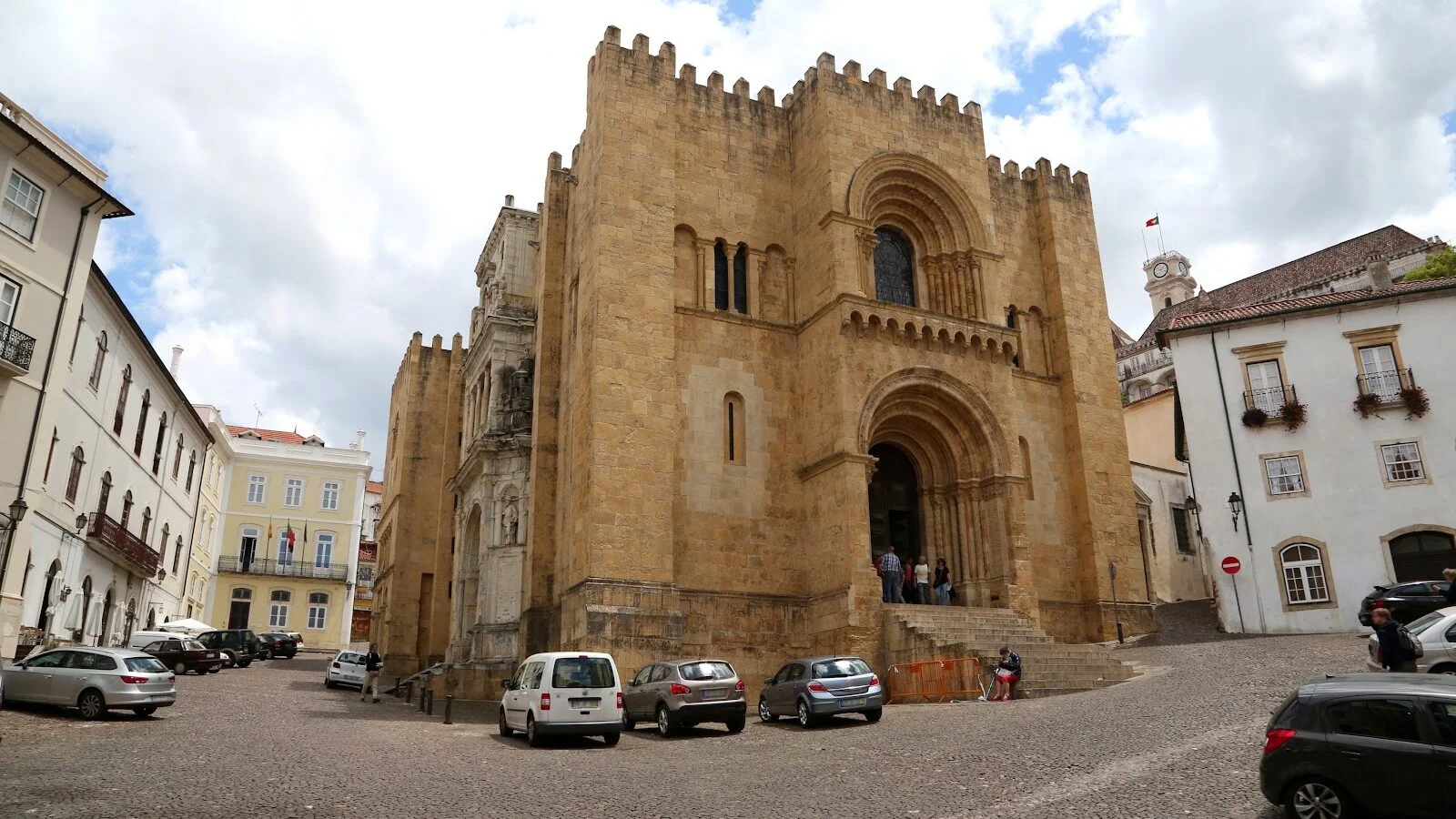
A short downhill walk brings you to Sé Velha, Coimbra’s twelfth-century Romanesque cathedral. Its fortress-like exterior belongs to a very different architectural mood from the university’s gilded interiors. Pause in the surrounding square, then continue through lanes where a doorway, a small grocery or washing above the street can interrupt the monumental story in the nicest way.
For another substantial visit, choose the Machado de Castro National Museum, built over the Roman cryptoporticus of ancient Aeminium. Its underground galleries make the depth of Coimbra’s history wonderfully tangible. Do not squeeze it into a spare half-hour. Alternatively, the university’s Botanical Garden, founded in 1772, offers shade and a gentler change of pace.
Coimbra’s song tradition also deserves context. Associated with university life, its traditional form features male singers accompanied by Portuguese and classical guitars. Listen for the distinctive Coimbra Portuguese guitar rather than expecting the atmosphere of a Lisbon singing house. Ask locally about scheduled performances, and keep conversation for afterwards. Here, attentive silence is part of the pleasure.
Make room for lunch and the river
In the Baixa, around Praça do Comércio and neighbouring streets, look for a restaurant with a short menu and a proper lunch service. Chanfana, goat slowly cooked with red wine, belongs to the wider Coimbra region, particularly places such as Miranda do Corvo and Vila Nova de Poiares. It is a deeply savoury dish for an unhurried appetite. Leitão da Bairrada, roast suckling pig with crisp skin, is another regional temptation, best pursued north of the city around Mealhada.
For something sweet, ask for arrufadas de Coimbra, soft sweet buns, or pastéis de Santa Clara, associated with the city’s convent tradition and made with egg yolks and almonds. Afterwards, walk towards Parque Verde do Mondego. Across the river, Santa Clara-a-Velha reveals the remains of a medieval convent long troubled by flooding. Check its current opening arrangements before crossing specifically to visit. Even without another monument, the opposite bank offers a lovely view back towards the university.
Give Coimbra a sensible place in your journey
By road, allow approximately two to two and a half hours from Lisbon and around an hour and a half from Porto, before stops or heavy traffic. A day trip from either is possible, but Coimbra is especially rewarding as an overnight stop between them. From Faro, expect roughly four and a half to five hours of driving: this is a northbound journey stop, not a comfortable Algarve day excursion.
Portugal Magik is a trusted private tour partner for connecting Coimbra with a wider Portugal itinerary in Mercedes-Benz vehicles. A local driver/guide can shape the day around the guests, balancing timed university entry with walking ability, lunch and an optional regional stop.
Conímbriga’s Roman ruins lie about 25 to 30 minutes away by car; Mealhada is a similar drive north. Choose one addition rather than collecting both automatically. Coimbra’s lasting impression often comes in the unscheduled interval: a bell above the roofs, a second coffee, the river catching the late light.
Plan your own day
Share your dates, group size and interests, and we will suggest a tailored plan with a local driver/guide.