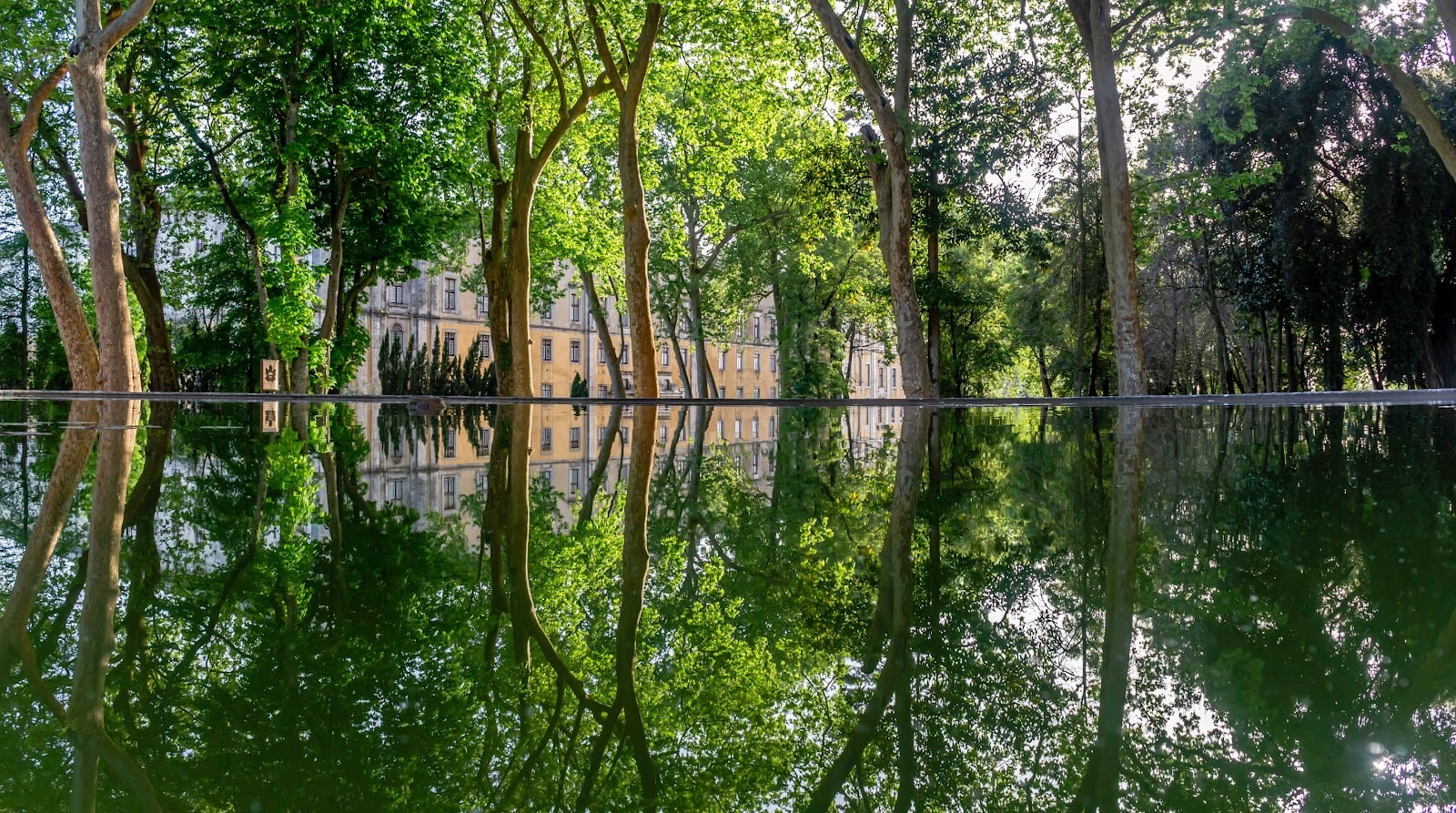
Venture beyond the famous turrets to discover the deeply human stories behind Portugal’s most evocative royal seats, from Sintra’s misty peaks to the sunlit plains of the Alentejo.
The Stone Tapestry of a Monarchy
In Portugal, royal palaces are never just displays of marble and gold. They are intimate chronicles of sea voyages, quiet heartbreaks, theatrical rivalries, and moments of sublime artistic ambition. Because our monarchs moved across the kingdom following seasonal rhythms, political shifts, and personal retreats, these grand seats dot the landscape far beyond the capital.
Walking through these halls today offers a vivid keyhole into who we were and how our small nation shaped vast corners of the earth. From the romantic peaks of the Serra de Sintra to the rolling oak horizons of the Alentejo, each royal dwelling carries a singular temper. To understand Portugal, one must step past the manicured hedges and listen to the human whispers settled into the limestone.
Palacio Nacional de Sintra: Moorish Echoes and Kitchen Chimneys
Rising above the heart of Sintra village stand the two great conical chimneys that define the Palacio Nacional de Sintra. Known locally as the Town Palace, this is Portugal’s best preserved medieval royal residence, inhabited continuously from the early fifteenth century until the twilight of the monarchy in 1910.
Step inside the Sala dos Brasoes, where the ceiling displays the coats of arms of seventy-two noble families beneath a gilded dome, painted after a thwarted treason plot. In the Sala das Pegas, the ceiling flutters with scores of chattering magpies, commissioned by Dom Joao I to silence palace gossip about a lingering kiss given to a lady-in-waiting. Outside, Sintra village can be notoriously tricky to navigate by car, with tight lanes and restricted access. Touring with Portugal Magik in a comfortable Mercedes-Benz vehicle removes every parking headache, allowing your local driver and guide to adapt the day around your pace while sharing the stories behind the painted tiles.
Palacio Nacional de Mafra: A Vow Carved from Gold and Marble
Located just forty-five minutes north of Lisbon, the sheer scale of the National Palace and Convent of Mafra stops travelers in their tracks. In 1711, King Joao V swore a solemn vow to build a Franciscan convent if his wife, Queen Maria Anna of Austria, gave him an heir. When Princess Barbara was born, Brazilian gold was pouring into Lisbon, and the modest convent exploded into a monumental basilica and royal palace spanning nearly four hectares.
The standout jewel here is the Rococo library, paved in soft pink, grey, and white marble, holding more than thirty-six thousand leather-bound volumes. To protect these rare manuscripts from insects, a colony of tiny bats lives inside the library, swooping through the arches after nightfall. Afterward, sit down at a village tavern in Mafra for roasted suckling pig or fresh bread baked with regional flour, tasting the hearty flavors of the rustic west.
Browse our travel inspiration for ideas, or tell us what kind of day you have in mind.
Palacio Ducal de Vila Vicosa: Marble Royalty in the Alentejo
Travel east across the Tagus River into the sun-drenched Alentejo, about two hours from Lisbon, and you arrive at Vila Vicosa. Long before the House of Braganca ascended to the Portuguese throne in 1640, this sleepy town was their ancestral seat. The facade of the Ducal Palace stretches an astounding one hundred and ten meters, clad entirely in local white and pink marble quarried right from the surrounding ground.
Inside, the palace feels frozen on the morning of February 1, 1908. It was from these cool marble courtyards that King Carlos I and his family set out on their fateful return journey to Lisbon. The kitchen here is legendary, lined with hundreds of gleaming copper cookware items, the largest collection in private royal hands. In town, take a leisurely lunch of migas com carne de alguidar, marinated pork served with breadcrumbs cooked in olive oil and garlic, followed by sweet Sericaia topped with local Elvas plums.
Palacio Nacional de Queluz: Rococo Fountains and Royal Tears
Often called the Portuguese Versailles, Queluz sits midway between Lisbon and Sintra, just a twenty-minute drive from the capital. Built in the mid-eighteenth century as a summer leisure estate for Dom Pedro of Braganca, Queluz showcases the delicate curves of Portuguese Rococo architecture, with pastel facades, azulejo canals where the royal court once floated in small gondolas, and formal boxwood parterres.
Behind the playful plasterwork lies poignant history. Queluz became the gilded confinement of Queen Maria I as her mind slipped into melancholy following the deaths of her husband and eldest son. Wandering through the Throne Room and the Music Room, where Italian operas entertained the court, you sense the bittersweet contrasts of an empire on the brink of dramatic upheaval. It remains one of the quietest, most evocative stops on any regional circuit.
Paco dos Duques de Braganca: Granite Might in Guimaraes
To encounter the northern soul of Portugal, travel to Guimaraes, roughly forty minutes northeast of Porto. Here stands the Palace of the Dukes of Braganca, built in the early 1420s by Dom Afonso, the future first Duke of Braganca. With its towering brick chimneys, steep rooflines, and heavy granite walls, it reflects the austere architectural influence of northern European baronial keeps, distinct from the lighter southern palaces.
The great hall features an immense ceiling shaped like the inverted hull of a wooden ship, framed in chestnut timber. Wandering between Flemish tapestries and Persian carpets, you feel the frontier spirit that forged the Portuguese nation. Guimaraes is easily experienced on an unhurried day journey from Porto. A skilled local driver and guide can weave a walk through this medieval fortress together with lunch in the historic center, savoring broth-rich caldo verde and tender vitela assada, crafting an effortless regional day without any schedule stress.
Plan your own day
Share your dates, group size and interests, and we will suggest a tailored plan with a local driver/guide.