Journey beyond the tasting room to explore the granite terraces, maritime sands, and sunlit plains that define Portuguese winemaking.
Understanding the Liquid Landscape
To understand Portuguese wine, you have to look at the geology beneath your shoes. This narrow slip of land on the edge of the Atlantic holds an astonishing concentration of indigenous grapes, distinct microclimates, and ancestral techniques. While much of the global wine world turned toward uniform international varieties, Portugal stayed fiercely loyal to its own vines: Touriga Nacional, Baga, Encruzado, and Alvarinho, among more than two hundred others.
Traveling through our wine regions is less about checking off famous brand names and more about witnessing how humans have coaxed character from extreme landscapes. In the north, vines cling to sheer schist canyons or scramble over granite pergolas. Along the Atlantic perimeter, ocean gales shape low, salt-crusted bushes rooted in pure beach sand. Further south, ancient clay amphorae stand tall inside whitewashed village cellars, fermenting grape must exactly as the Romans taught us two millennia ago.
The Verdant North: Minho and the Vinho Verde Valley
In the far north, where Portugal borders Spanish Galicia, the landscape turns remarkably emerald. This is the Minho, the home of Vinho Verde. Forget the mass-produced, spritzy pink bottles often found on overseas supermarket shelves. Authentic Vinho Verde is vibrant, bone-dry, and deeply mineral, driven by the noble Alvarinho grape around Moncao and Melgaco, or the citrusy Loureiro grown along the Lima River.
A visit here pairs crisp acidity with hearty northern hospitality. In riverside towns like Ponte de Lima, a glass of cold Loureiro cuts through the rich fat of roasted sarrabulho or fresh river lamprey. Driving from Porto takes about an hour to an hour and a half, winding past granite manor houses with leafy trellises that shade village lanes. It is an invigorating, moisture-rich landscape where the rain clouds sweep straight off the Atlantic into mossy valleys.
The Schist Terraces of the Douro and the Granite Heart of Dao
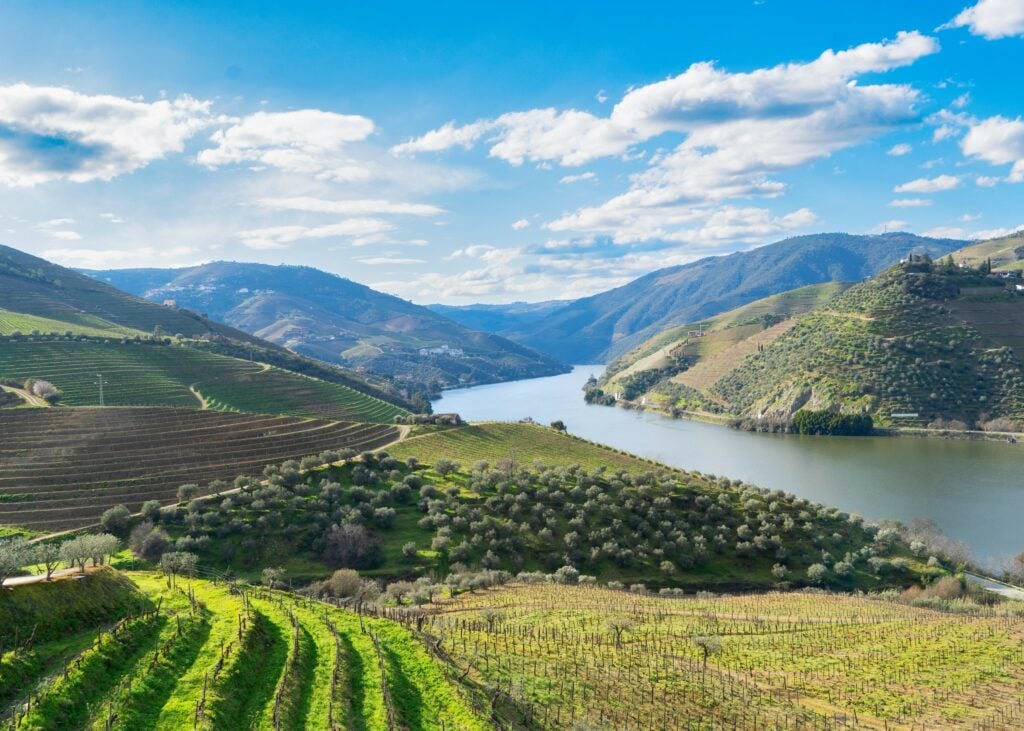
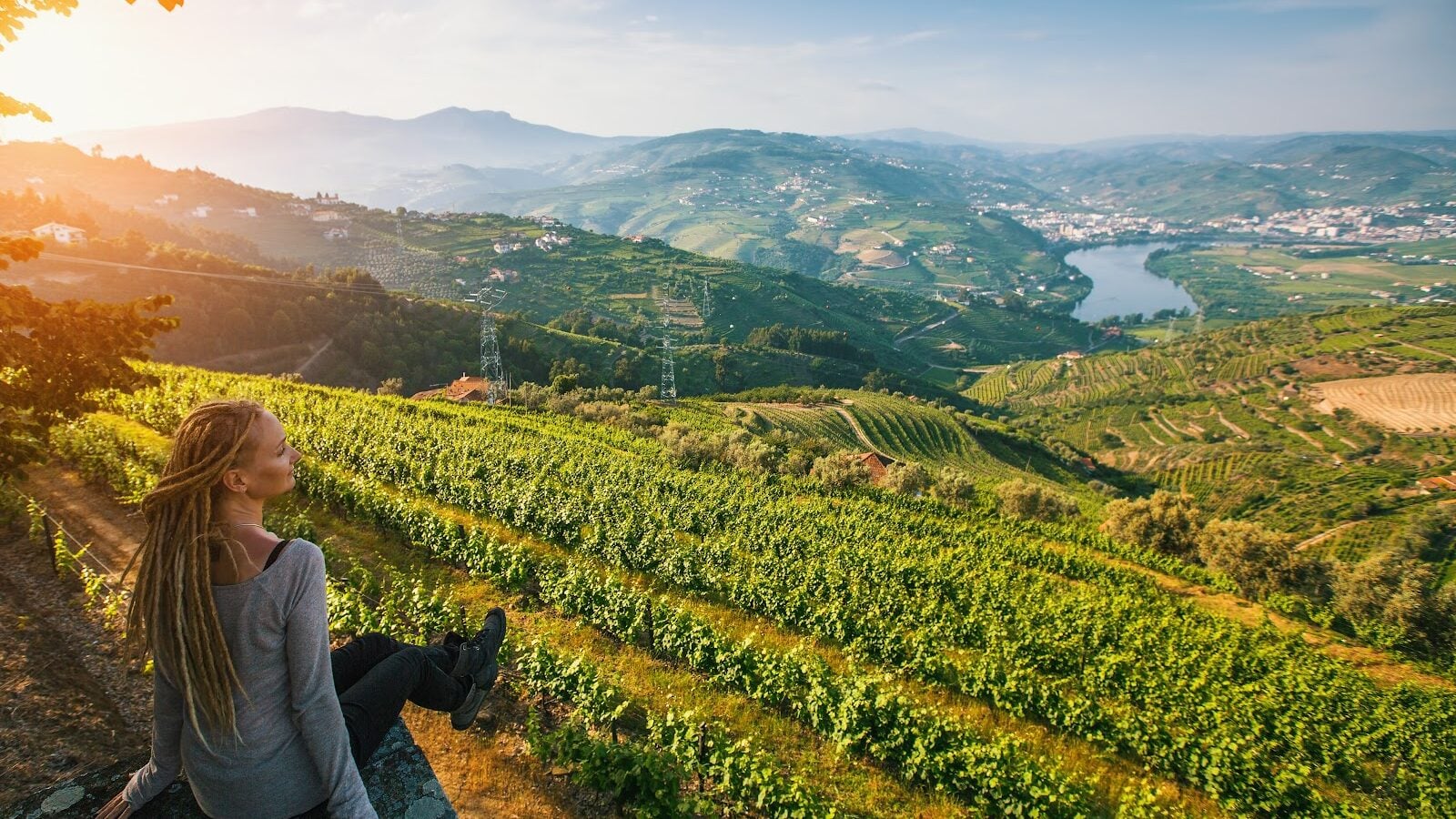
East of Porto, the Douro Valley rises like a massive open-air amphitheater carved by human hands over hundreds of years. The slate soil, known as schist, fractures vertically, forcing old vine roots to hunt deep underground for moisture during scorching summer months. While the Douro earned world renown for Port, its unfortified table reds and structured field-blend whites now command equal respect. The journey from Porto to Pinhao takes roughly two hours by road, but the dramatic switchbacks require an experienced hand behind the wheel.
Just south of the Douro, sheltered beneath the granite shoulders of the Serra da Estrela, lies the Dao. If the Douro produces muscular power, the Dao offers poise, restraint, and longevity. The granite soil and high elevation create reds with wild blackberry notes and fine tannins, alongside the queen of Portuguese white grapes, Encruzado. Pairing a cellar stop near Viseu with rustic Serra da Estrela mountain cheese is one of the most rewarding sensory pairings in the country. Having a private driver and guided tour partner like Portugal Magik lets curious travelers absorb these steep panoramas in Mercedes-Benz comfort without the stress of navigating hairpin mountain turns.
Browse our travel inspiration for ideas, or tell us what kind of day you have in mind.
Bairrada and the Atlantic Fringe: Colares to Setubal
Moving toward the central coastline, Bairrada reveals an entirely different winemaking soul. Here, chalky clay soils meet cool ocean air, producing the temperamental Baga grape. Once misunderstood for its fierce tannins, aged Baga shows the haunting complexity of Barolo or Pinot Noir. It is also the traditional partner for local suckling pig, leitao da Bairrada, roasted until the skin shatters like porcelain. Mealhada sits about an hour south of Porto, making it a natural midday pause when traveling toward central Portugal.
Closer to Lisbon, extreme maritime terroir takes center stage. In Colares, nestled between the Sintra hills and the roaring Atlantic surf, pre-phylloxera Ramisco vines sprawl directly across sand dunes, shielded from biting ocean winds by dry cane fences. A short drive south across the Tagus River brings you to the Setubal Peninsula, where Muscat of Alexandria vines yield golden, sun-drenched Moscatel de Setubal. A thoughtful local driver and guide can shape the day around your personal tastes, turning a simple route between Lisbon and the coast into a living history lesson of salt, wind, and old vines.
The Sun-Drenched Plains: Alentejo and the Amphora Tradition
Cross the wide plains of the Alentejo, an hour and a half east of Lisbon, and the pace slows to an unhurried crawl. Here, the heat rolls across golden wheat fields, olive groves, and cork oak forests. Towns like Estremoz, Borba, and Evora anchor a region famous for generous, velvety reds made from Alicante Bouschet, Aragonez, and Trincadeira. These bottles carry the warmth of long afternoon sunlight and pair effortlessly with acorn-fed black pork and herb-scented bread stews.
In small hamlets around Vidigueira, growers still practice the ancient craft of Talha wine. Whole clusters ferment naturally inside enormous clay vessels sealed with olive oil and resin, a tradition unbroken since Roman antiquity. The resulting wine is earthy, textured, and deeply rustic, tasting of clay and dried herbs. Experiencing these small, family-owned adegas requires genuine local access, as the finest pots are often tucked away in unpretentious village taverns that look unchanged from a century ago.
Planning Your Journey Through Portuguese Wine
A successful wine route through Portugal requires realistic timing rather than ambitious checklist ticking. Distances on a map can be deceiving, as narrow rural lanes and mountainous terrain demand patience. Choosing two or three distinct regions across a week allows you to truly grasp how soil, elevation, and proximity to the ocean alter what lands in your glass. Visiting two wineries a day, punctuated by a generous midday feast at a local tasca, creates the right balance between exploration and leisure.
Because tasting pours are generous and regional roads require sharp attention, arranging seamless private transportation is the wisest choice for serious wine travelers. Entrusting your route to Portugal Magik ensures you travel between quiet cellars and mountain lookouts with ease, while a knowledgeable local driver guides you past tourist traps straight to family estates where the winemakers themselves pull the corks.
Plan your own day
Share your dates, group size and interests, and we will suggest a tailored plan with a local driver/guide.