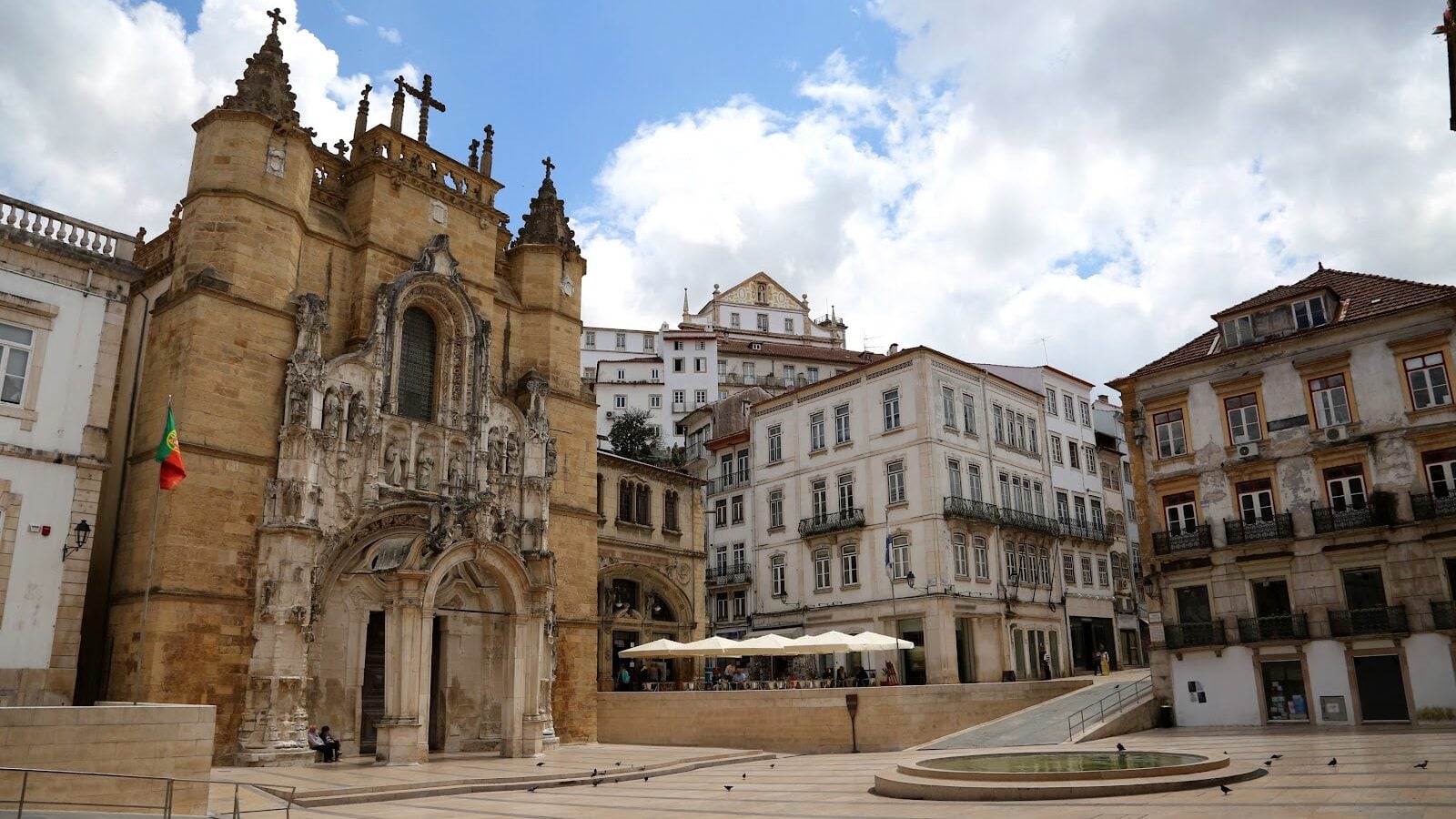
Perched above the gentle waters of the Mondego River, Coimbra holds the intellectual heart of Portugal within its ancient courtyards and gilded bookshelves.
The Hill That Educated a Nation
If you want to understand the cadence of modern Portuguese leadership, law, and poetry, you must stand on the hilltop square of the University of Coimbra. Long before Lisbon became the undisputed center of modern political power, Coimbra was the capital of the young kingdom. When King Dinis established the university in 1290, he laid the cornerstone for an intellectual tradition that has shaped our nation for over seven centuries.
Walking through the Iron Gate, or Porta Férrea, you enter the Paco das Escolas. The limestone courtyards gleam under the central Portuguese sun, offering sweeping views down over red-tiled roofs to the Mondego River below. The air smells faintly of aged stone and river breeze. Even now, you will cross paths with students hurrying across the cobbles draped in the capa e batina, the traditional black wool capes that inspired generations of romantic storytellers. This is not a static museum. It is a working sanctuary of thought where examinations still terrify, academic ceremonies follow centuries-old Latin liturgies, and the heavy clock tower, nicknamed A Cabra (the Goat) by undergraduates, still orders the rhythm of the day.
Gilded Shelves and Midnight Watchmen
The undisputed crown jewel of the upper campus is the Biblioteca Joanina, an early eighteenth-century Baroque library named after King Joao V. Stepping across its threshold requires silence, both to respect the scholars working within its deeper archives and because the sheer theatricality of the room demands it. Three vast salons rise up into painted ceilings that trick the eye, lined with floor-to-ceiling shelves carved from rosewood, oak, and Brazilian jacaranda, all decorated in gold leaf.
More than sixty thousand leather-bound volumes rest here, surviving humidity and wood-boring insects thanks to two remarkable defenses. The outer walls are over two meters thick, maintaining a remarkably steady indoor temperature year-round. The second line of defense is alive. A small colony of common pipistrelle bats lives behind the ornate wooden cornices. Every evening, staff cover the antique study tables with heavy green leather cloths. At night, the bats emerge to feast on booklice and beetles before returning to the rafters before dawn. It is an extraordinary, living example of eighteenth-century ecological preservation that still works without interruption.
From Academic Heights to Lower Town Alleys
Descending from the university down to the river takes you through the steep, labyrinthine streets of the medieval city. A particularly dramatic passage is the Quebra-Costas, literally the Backbreaker staircase, which drops down toward the Arch of Almedina, the ancient gate that once guarded the Moorish and medieval perimeter. The stones beneath your shoes have been polished slick by countless generations of boots and canvas espadrilles.
Along these winding alleys, you pass the Republicas, traditional student co-ops where students have lived communally for centuries under self-governing banners, often marked by satirical murals and political banners hung from iron balconies. Farther down, you will hear the deep, melancholic strums of the Portuguese guitar. Unlike the Fado of Lisbon, which was historically born in maritime taverns and sung by both men and women about fate and hardship, the Fado of Coimbra is sung exclusively by men, traditionally students and alumni, dressed in their black capes. Its lyrics dwell on student memories, lost youth, and verses of classic Portuguese poetry, sung with a resonant elegance meant to echo through stone courtyards.
Browse our travel inspiration for ideas, or tell us what kind of day you have in mind.
Tables of the Centro: Chanfana and Convent Sweets
Exploring Coimbra requires hearty sustenance, and the surrounding Beira Litoral region does not disappoint. The traditional lunch counter here is unpretentious and deeply regional. A signature local dish is chanfana, tender goat or mutton slow-cooked for hours inside unglazed black clay pots with red wine, garlic, bay leaves, and pig fat. It was born during the Peninsular War when locals hid their livestock from invading forces and cooked the meat slowly in wine to preserve it. The result is fall-apart meat in a rich, deeply savory broth that begs for crusty cornbread.
For something sweet after lunch, cross the river or visit the pastry shops near the Santa Cruz Monastery, where the first kings of Portugal lie buried. The nuns of centuries past left an incredible legacy of doces conventuais, pastries built on egg yolks, sugar, and ground almonds. Look for Pastéis de Santa Clara, light puff pastry parcels dusted with sugar and filled with sweet egg cream, or Arrufadas de Coimbra, a light, brioche-like pastry spiced with cinnamon that has fueled afternoon study sessions for generations.
Planning Your Journey: Timing and Comfort
Geographically, Coimbra sits squarely in the heart of Portugal, making it one of the most rewarding stops between Lisbon and Porto. Driving north from Lisbon on the A1 motorway takes about two hours (around 200 kilometers). From Porto, the drive south is even quicker, taking roughly an hour and fifteen minutes. If you are exploring the wider center, it pairs effortlessly with a morning visit to the Roman ruins of Conimbriga just fifteen minutes south, or the ancient Buçaco National Forest to the north.
However, navigating Coimbra by car can be challenging. The historic center was designed for pack mules and scholars on foot, and finding parking near the university summit is nearly impossible. Many travelers find that exploring with a trusted partner like Portugal Magik turns the day into a seamless pleasure. Traveling in a comfortable Mercedes-Benz vehicle, your dedicated local driver and guide can handle the narrow climbs, drop you directly at the upper university courtyard, and shape the day around your personal interests, whether that means lingering over ancient manuscripts or finding a quiet riverfront terrace.
Across the River to Ines and Beyond
Before leaving Coimbra, make time to cross the Santa Clara bridge to the western bank of the Mondego. Here lies the Quinta das Lágrimas, the Estate of Tears, setting of the tragic fourteenth-century love story between Prince Pedro and his beloved Ines de Castro. Ines was executed on the orders of King Afonso IV near the estate springs, and legend tells that the red algae still visible on the stones at the Fonte das Lágrimas carries the permanent stain of her spilled blood.
Nearby stand the atmospheric ruins of the fourteenth-century Santa Clara-a-Velha convent, which spent centuries partially submerged by the periodic winter floods of the Mondego before being meticulously excavated and preserved. Standing on this bank as the late afternoon light strikes the university hill across the water, the stone towers turn honey-colored, and the bells of the tower ring out across the valley. It is a moment of pure, timeless Portugal, an invitation to slow your pace and listen to the centuries speak.
Plan your own day
Share your dates, group size and interests, and we will suggest a tailored plan with a local driver/guide.