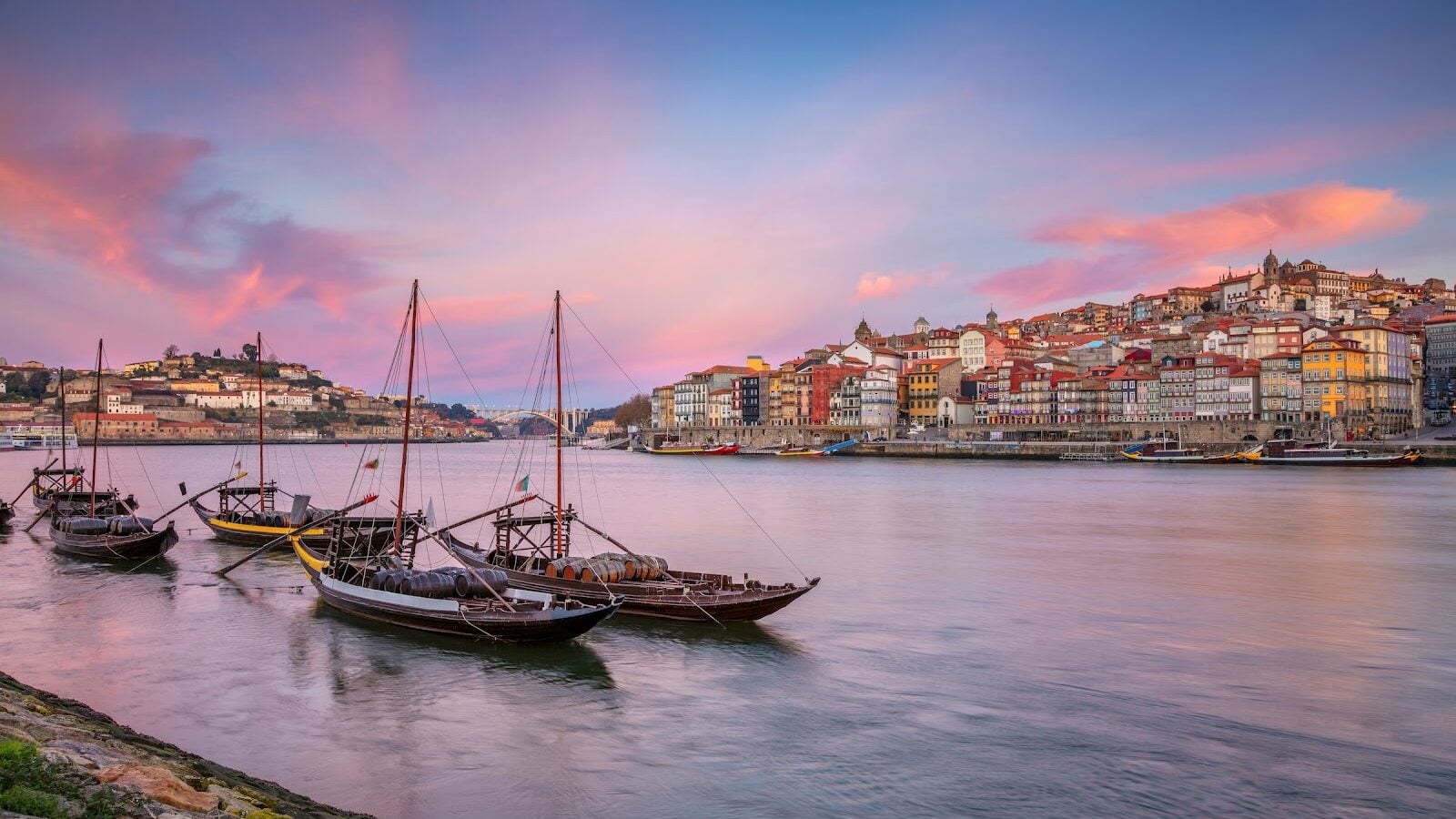
Discover the centuries of craft behind Port wine, from the shadowy cellars of Vila Nova de Gaia to the sun-baked schist terraces of the Alto Douro.
The River Mist and the Oak Casks of Gaia
Cross the lower span of the Dom Luis I bridge on foot, and you immediately sense the shift in atmosphere. Porto perches on its northern granite bluff, all church towers, clattering trams, and laundry snapping in the Atlantic breeze. Yet across the water, Vila Nova de Gaia breathes a different rhythm. Here, red tiled roofs shelter miles of ancient cooperage, where thick stone walls keep the air cool, damp, and steady throughout the year.
Walking into these lodges feels like entering a cathedral of wood and time. The air smells intensely of dark fruit, dried figs, damp earth, and toasted oak. For centuries, the barrels were brought here because Porto was too hot and exposed on its sunward slopes. Gaia faced north, protected from scorching summers, allowing fortified wines to mature without losing their balance or cooking in the barrel. Even today, the river dampness remains an essential partner in aging every drop.
Decoding the Glass: Rubies, Tawnies, and Hidden Vintages
Standing before a flight of glasses, newcomers often wonder where to start. The world of Port wine divides into two philosophies of aging: wood and glass. Understanding this distinction changes how you taste. Ruby ports, including Late Bottled Vintage and declared Vintage Ports, spend minimal time in wood so they retain their deep berry purple color, bold tannins, and exuberant fruit. Vintage Port matures in the bottle for decades, gradually casting a heavy sediment and developing notes of cocoa, tobacco, and black cherry.
Tawny ports take the opposite path. Kept inside smaller oak pipes for ten, twenty, thirty, or forty years, they absorb oxygen through the porous staves. The deep red softens into amber and walnut shades. A sip reveals hazelnuts, caramel, orange peel, and warm spice. Colheitas are single harvest tawnies, offering a snapshot of one extraordinary summer captured decades ago. Pair a cool white Port with salty roasted almonds before dinner, or match a rich 20 Year Old Tawny with a slice of creamy Queijo Serra da Estrela, and the wine makes complete sense.
Choosing Your Cellar Visits Along the Water
The riverfront in Gaia offers dozens of historic houses, but choosing where to spend your hours pays dividends. Longstanding British-founded houses like Graham’s, sitting proudly on a quiet hill overlooking the entire curve of the Douro, hold vast libraries of vintage bottles and peaceful tasting rooms with panoramic river views. Visiting Ferreira, by contrast, connects you directly to the Portuguese soul of the wine. Built on land expanded by Dona Antonia Adelaide Ferreira in the nineteenth century, its cavernous stone aisles showcase genuine domestic grit and visionary winemaking.
For a quieter visit, seek out houses like Niepoort, Churchill’s, or Quinta dos Corvos. These spaces offer intimate visits where cooperage tools, dusty family bottles, and candid conversations take center stage. You avoid crowds and have space to ask why one parcel of Touriga Nacional responds differently to wood than another parcel picked just ten meters higher up the hillside.
Browse our travel inspiration for ideas, or tell us what kind of day you have in mind.
Following the Liquid Thread to the Douro Terraces
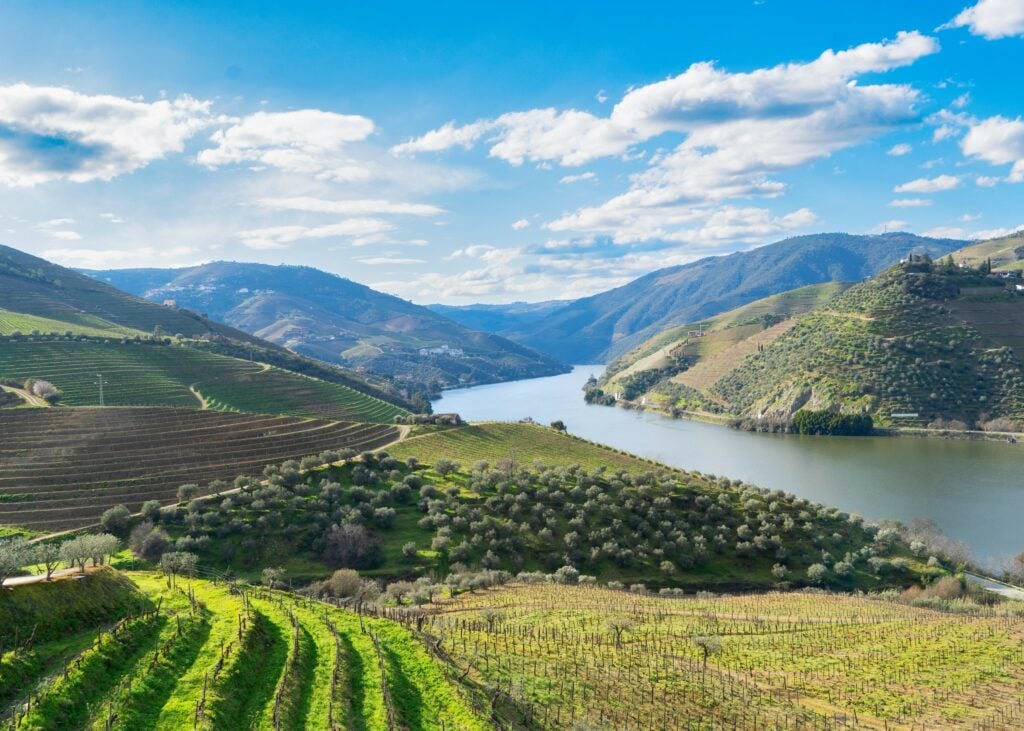
No exploration of Port is complete in Gaia alone. The wine rests by the ocean, but it is born in the furnace of the Alto Douro, roughly one hundred kilometers inland. In centuries past, flat-bottomed rabelo boats fought fierce river rapids to float the barrels down from rocky quintas to the coastal lodges. Today, the journey inland by car takes about an hour and a half to reach Peso da Regua, followed by another thirty minutes of winding beauty to reach the postcard town of Pinhao.
As you drive east, maritime clouds evaporate into bright, dry heat. The hillsides transform into staggering amphitheaters of hand-built dry stone terraces cut directly into dark schist rock. Vines sink their roots tens of meters deep through rock fractures in search of water. It is an extreme, heroic landscape. Walking these steep terraces at quintas such as Quinta do Bomfim, Quinta do Crasto, or Quinta do Noval lets you grasp how hard the soil works to yield even a single bunch of grapes.
Exploring Portugal with Ease and Insight
While trains run along the river bank, reaching the smaller family-run vineyards perched high on the ridges requires climbing steep, hairpin roads with sheer drops and unpredictable turns. Navigating these mountain passes can quickly wear down an unfamiliar driver, especially on a day meant for relaxed tastings and vineyard lunches.
Traveling with Portugal Magik turns the route into a pleasure. With a professional local driver and comfortable Mercedes-Benz vehicle, the road becomes an effortless unfolding of river bends, stone villages, and hilltop viewpoints like Sao Salvador do Mundo. Having a knowledgeable guide means your day is tailored entirely to your pace. If you prefer to linger over grilled river trout and fresh cornbread at a family tavern in Provesende, or pause for photographs as golden hour strikes the terraces, your guide shapes the day around your personal interests.
Beyond the North: Port in the Broader Portuguese Tapestry
Porto and the Douro offer a singular wine tradition, but they belong to a country full of varied terroirs. Just two hours south, the pine forests and granite soils of the Dao yield elegant, fresh reds that contrast sharply with the Douro’s muscular warmth. Further south still, the sun-drenched plains of the Alentejo produce rounded, velvet wines that accompany slow-cooked pork and herb stews. Even in the capital, Lisbon, historic taverns feature Carcavelos, an ancient fortified cousin of Port grown practically within reach of ocean spray.
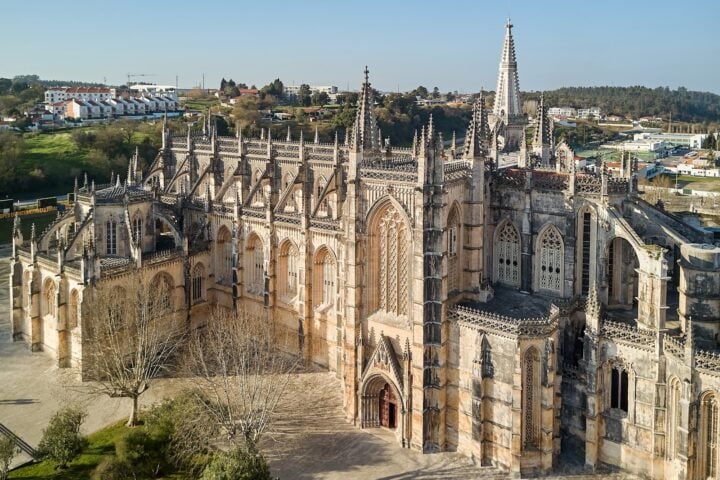
Whether you are planning a northern journey through Gaia and Pinhao, or weaving your way across central monasteries down to the southern shores of the Algarve, taking time to understand the regional wine brings the land to life. Every glass poured in Portugal carries the story of the weather that year, the soil beneath the vine, and the patient hands that tended the barrel until you arrived to taste it.
Plan your own day
Share your dates, group size and interests, and we will suggest a tailored plan with a local driver/guide.