From June nights scented with grilled sardines to flower-covered streets in the Atlantic islands, Portugal’s festivals reveal the country at its most wholehearted. Here are the celebrations worth building a journey around, with room for both spectacle and everyday pleasures.
Lisbon: Santo António and a city that stays up late
There is a moment in June when Lisbon seems to move its dining room outdoors. Sardines hiss over charcoal, paper decorations flutter between windows, and someone finds space for another chair. The festivities honouring Santo António peak on the night of 12 June, before his feast day on the 13th. Born in Lisbon around 1195, the saint remains a neighbourhood favourite, especially when matters of marriage enter the conversation.
Watch the neighbourhood marching groups on Avenida da Liberdade, then seek an arraial, a street celebration, in Alfama, Bica or Graça. Order sardines on bread and caldo verde, and expect crowds rather than a seated restaurant evening. Stay within walking distance if possible: road closures make doorstep pickups unrealistic. June celebrations continue beyond the main night, so visitors who prefer breathing space can still catch the atmosphere without joining the biggest crush.
Porto and Minho: São João, then the great northern pilgrimage
Porto’s São João reaches its exuberant peak on 23 June. Plastic hammers squeak above the crowds, grilled peppers accompany sardines, and fireworks draw eyes towards the Douro at midnight. The hammer-tapping is playful, but the riverfront becomes seriously busy. Choose your bank early, wear shoes for cobbles, and do not assume you can cross the bridges whenever you wish.
For another northern mood, Viana do Castelo’s Romaria de Nossa Senhora d’Agonia takes place in August, with exact dates and processions varying by year. Traditional dress, family gold jewellery and the fishing community’s devotion give it extraordinary presence. Viana is roughly an hour from Porto by road in ordinary traffic. Portugal Magik is a trusted private tour partner for exploring this northern region in Mercedes-Benz vehicles; a local driver/guide can shape the day around the guests, combining the celebrations with quieter stops while respecting street closures.
Central Portugal: Tomar beneath the towering tabuleiros
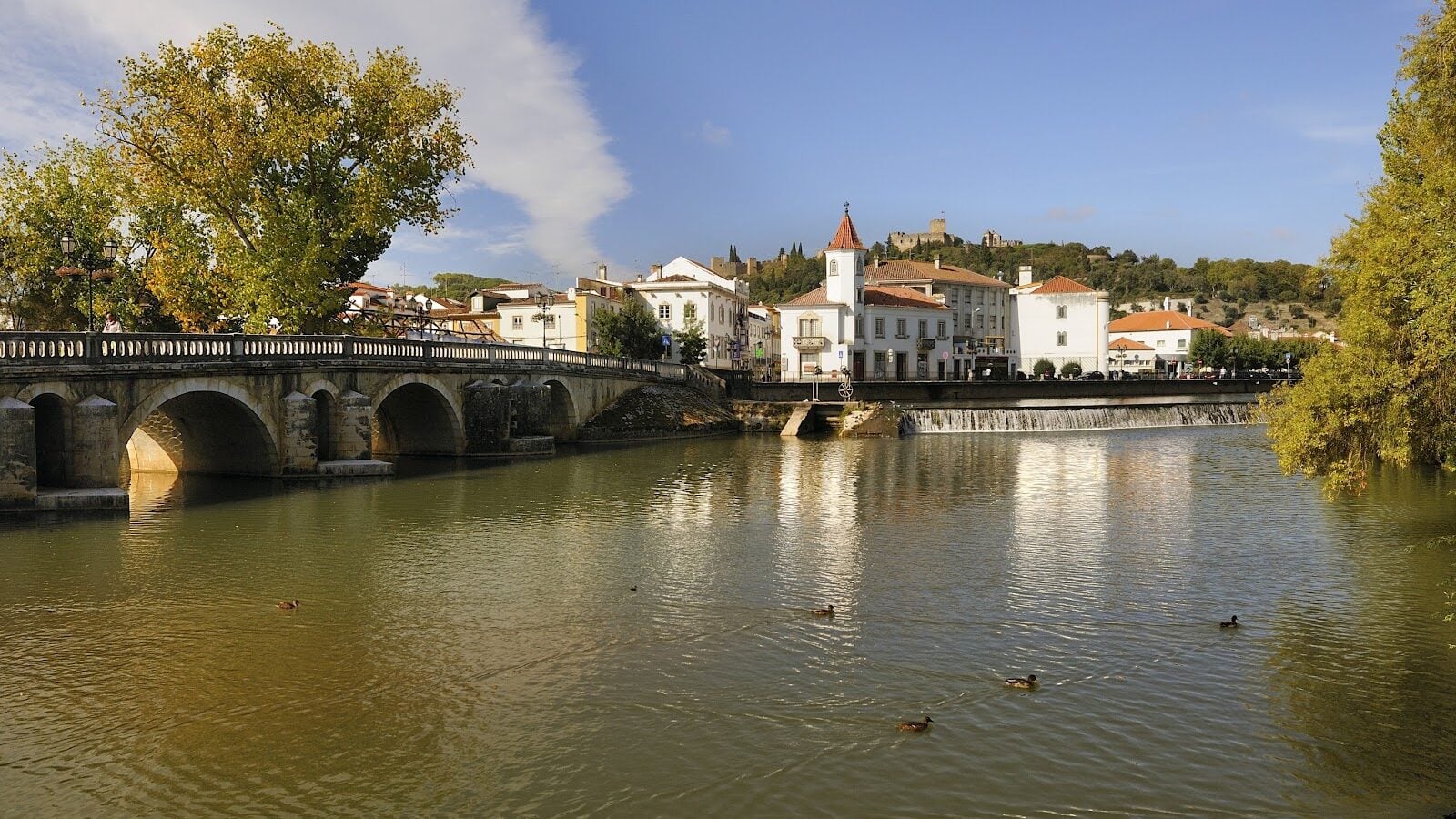
Tomar’s Festa dos Tabuleiros is not an annual appointment. Normally held every four years, it deserves deliberate planning and confirmation of the next official programme before booking. Its great procession features women carrying towering trays of bread and paper flowers, accompanied by partners who help steady the load. The trays are crowned with a cross or a dove associated with the Holy Spirit.
The celebration belongs to Portugal’s Holy Spirit traditions, although its deeper origins are debated. Decorated streets reward a visit before procession day, when the town feels less compressed. Tomar lies around one hour and 45 minutes from Lisbon by road before festival traffic. A day trip is possible, but an overnight stay makes the principal events easier. Visit the Convent of Christ separately if you can: neither its carved stonework nor the festival deserves to be squeezed into the leftover hour.
Browse our travel inspiration for ideas, or tell us what kind of day you have in mind.
Alentejo: Évora’s Feira de São João
Évora’s Feira de São João brings a different rhythm to late June: less a single dramatic procession than a long-established gathering of commerce, entertainment and regional life. Held around the Rossio de São Brás, outside the historic walls, the fair has medieval roots. Its contemporary programme mixes stalls, crafts, music and places to eat, with details changing each edition.
Spend the morning among Évora’s Roman temple, lanes and whitewashed houses, then retreat during the hottest hours. Return to the fair towards evening, when local families emerge and the air begins to soften. Look for Alentejo cheeses, cured meats and regional sweets rather than expecting every stall to serve traditional food. Lisbon to Évora usually takes about one hour and 30 minutes by road. Staying overnight lets you enjoy the evening without watching the clock for the return.
Algarve: Loulé’s Carnival, before the beach season
The Algarve has a life well beyond summer, and Loulé’s Carnival is an excellent reason to meet it. Its organised parade tradition dates to 1906, with decorated floats, dancers and satire that often takes aim at politicians and public figures. Celebrations cluster around Shrove Tuesday, so the dates shift with Easter, usually falling in February or early March.
Loulé is inland, about 25 minutes from Faro by car under normal conditions. Arrive before the parade restrictions tighten, and check ticket arrangements for the main circuit rather than assuming every event is free. On a morning when it is open, browse the municipal market, whose early twentieth-century building wears distinctive red domes. Leave time for an almond or fig sweet in a local café. Bring a layer and a rain jacket: southern Portugal can feel wonderfully bright in winter, but it is not reliably warm.
Madeira: Funchal in flower
Madeira’s Flower Festival usually falls in spring, commonly across parts of April and May, with dates set annually. Funchal fills with floral displays, and the main parade brings elaborate costumes and flower-covered floats to the waterfront. The children’s Wall of Hope ceremony offers a gentler counterpoint to the grand procession.
Allow several nights rather than flying in for one event. You will want time for the market, gardens and perhaps a mountain outing when conditions suit. Madeira Airport is about 25 minutes from central Funchal by road, although festival restrictions can extend the final approach. Reserve parade seating early if standing for long periods would spoil the pleasure. Between events, try bolo do caco with garlic butter or grilled limpets. Island weather changes quickly, so keep outdoor excursions flexible rather than tying every day to a fixed mountain view.
Azores: devotion and lamplight in Ponta Delgada
On São Miguel, the Festas do Senhor Santo Cristo dos Milagres centre on the fifth Sunday after Easter. Ponta Delgada’s Campo de São Francisco glows with illuminations, while the procession draws islanders and returning emigrant families. The venerated image is kept at the Convent of Nossa Senhora da Esperança, and the devotion became especially prominent through Mother Teresa da Anunciada in the late seventeenth and early eighteenth centuries.
This is a living religious observance, not simply a spectacle. Give worshippers room, ask before close portraits, and accept that the procession sets the pace. Book flights and accommodation well ahead, especially for the central weekend. The airport is roughly ten minutes from the centre in normal traffic, but access changes during events. Stay several days to explore São Miguel too, keeping lake viewpoints flexible around cloud and leaving the festival itself unhurried.
Plan your own day
Share your dates, group size and interests, and we will suggest a tailored plan with a local driver/guide.