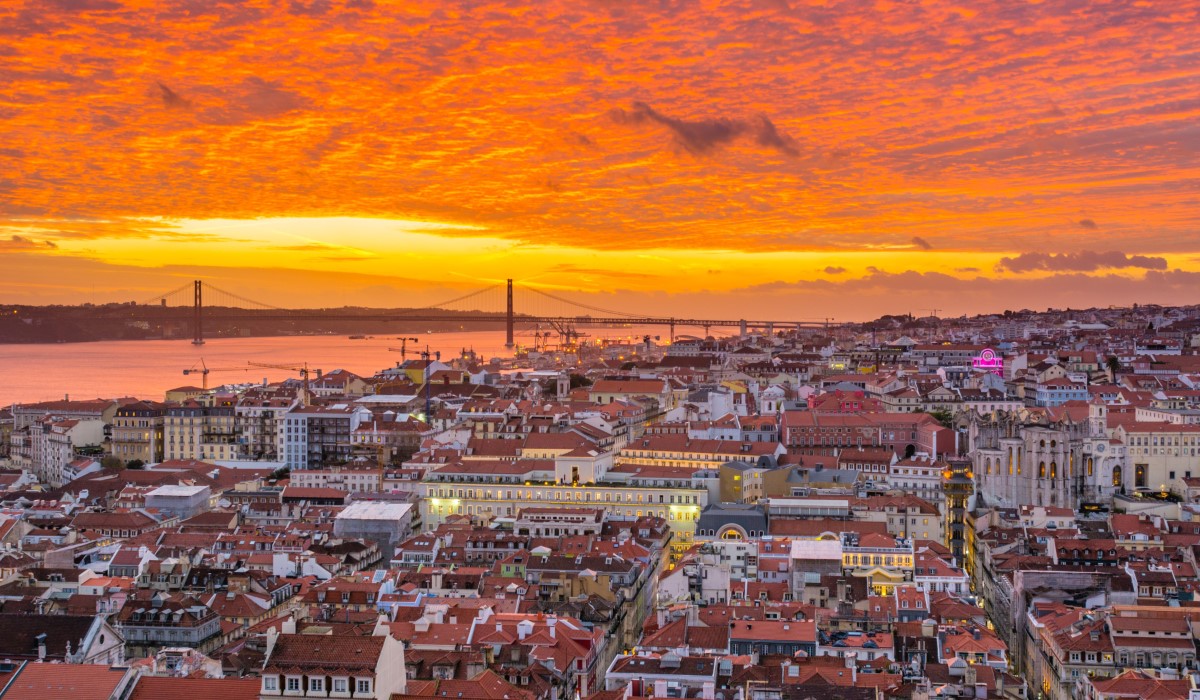
Walk from Chiado’s literary corners to Baixa’s broad riverfront square, following a route of tiled façades, good coffee and earthquake history. Allow half a day, and leave room for the stops you never planned.
Begin uphill, while Chiado is waking
Lisbon rewards walkers who get the direction right. Start in Chiado and drift downhill towards Baixa, rather than tackling the route in reverse after lunch. Around nine, delivery vans are still negotiating the streets, cups knock against saucers, and the pale stone catches the first clean light. This is not an undiscovered Lisbon, nor does it need to be. Its pleasure lies in watching a working neighbourhood carry on around its celebrated addresses.
Begin at Praça Luís de Camões, where the poet stands above a small island of patterned pavement. If arriving by metro, follow the signs for the Largo do Chiado exit at Baixa-Chiado station to emerge on the upper side. The walk described here covers roughly three kilometres, depending on detours. You could cover it in about an hour without stopping, but four to five hours makes room for coffee, Carmo, browsing and lunch.
Wear shoes with a proper grip. Lisbon’s limestone calçada can be slippery after rain, and even this mostly downhill route includes slopes, uneven paving and occasional steps.
Coffee, Pessoa and a bookshop worth entering
From Camões, walk a couple of minutes to A Brasileira on Rua Garrett. Opened in 1905, it became a meeting place for writers and artists; Fernando Pessoa’s bronze likeness now sits outside, patiently sharing photographs with strangers. The terrace is conspicuous and busy, but the interior deserves a look for its dark wood, mirrors and sense of an older café culture.
Order a bica, Lisbon’s familiar word for an espresso, and take a moment before reaching for the camera. For a quieter pause, keep your timing flexible rather than expecting a famous café to be peaceful. Early morning generally gives you more breathing room than late morning.
A short walk along Rua Garrett brings you to Livraria Bertrand, recognised by Guinness World Records as the world’s oldest operating bookshop, established in 1732. Step inside rather than treating it as a plaque to collect. There are English-language books among the shelves, and a Lisbon novel makes a better travelling companion than another hurried souvenir. Chiado’s literary associations feel more tangible with a book in your hand.
Carmo, where the sky became the ceiling
From Bertrand, allow five to ten minutes to reach Largo do Carmo via Rua do Carmo and Rua do Sacramento, with a short uphill stretch. The square feels enclosed and sociable, its terraces gathered around the Chafariz do Carmo fountain. In warm weather, the shade is an invitation to sit. In spring, the jacarandas can add a brief wash of purple overhead.
The roofless church of the Carmo Convent is one of Lisbon’s clearest encounters with the earthquake of 1 November 1755. Its Gothic arches survive against open sky, while the archaeological museum occupies the former church. Allow around 40 to 60 minutes if you go inside, and check current opening hours before building your morning around it.
The square also belongs to more recent history. At the Carmo barracks, Marcelo Caetano surrendered during the Carnation Revolution on 25 April 1974. Before leaving, follow the passage beside the convent towards the upper approach to the Santa Justa Lift for views across Baixa. Access arrangements for the lift and viewing terrace can change; there is no need to queue for a ride simply to continue this walk.
Browse our travel inspiration for ideas, or tell us what kind of day you have in mind.
Down to Rossio and into the rebuilt city
Return towards Rua do Carmo and descend to Rossio, allowing about ten minutes from Largo do Carmo. The official name is Praça Dom Pedro IV, but Rossio is what you will hear. Look across its wave-patterned paving towards the column and the neoclassical front of the Dona Maria II National Theatre. This is a square for crossing, meeting and pausing, not merely photographing.
A few minutes away, Praça da Figueira gives you a fine glimpse of São Jorge Castle above the rooftops. Confeitaria Nacional, founded in 1829 on the square, is a good address for a pastry stop. It is especially associated with bolo-rei, the fruit-and-nut Christmas cake, though the counter offers other reasons to visit outside the festive season.
Now turn south into Baixa’s grid. After the earthquake, tsunami and fires of 1755, this district was rebuilt under the administration of the Marquis of Pombal. Its straight streets and repeated façades were deliberate urban planning. Beneath some of those orderly buildings, timber frameworks known as gaiolas were designed to improve resistance to earthquake movement.
Leave the busiest street for lunch
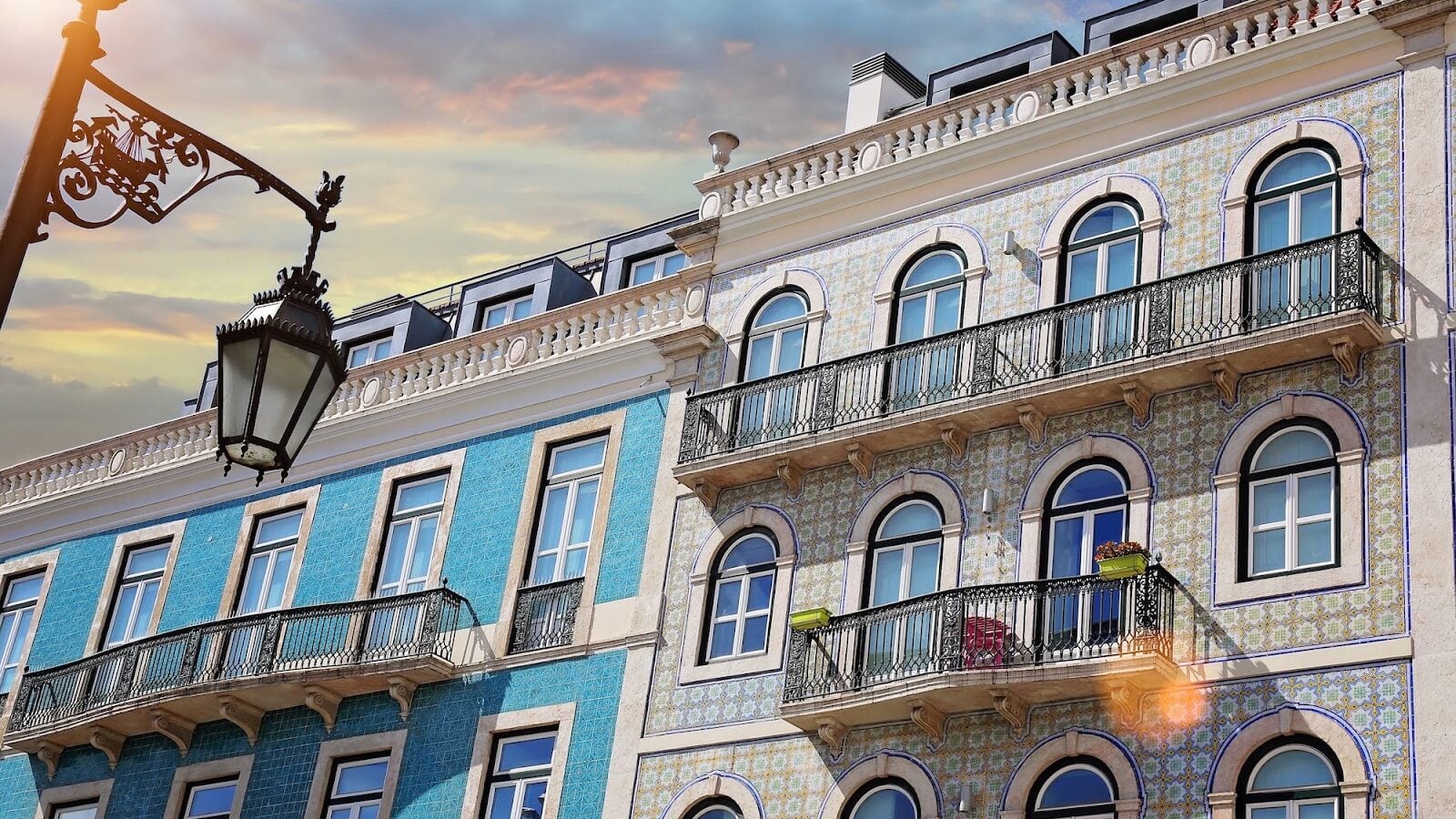
Rua Augusta is the obvious spine through Baixa, lively with pavement tables, performers and visitors heading towards the arch. Enjoy it, then slip onto parallel Rua dos Sapateiros or Rua dos Correeiros. The change is modest rather than miraculous, but a single turn often gives you more room to notice tiled façades, old signs and the rhythm of shopfronts.
For a traditional meal, João do Grão on Rua dos Correeiros is a longstanding option associated with bacalhau. Look for bacalhau à Brás, shredded salt cod with finely cut potatoes, egg and parsley, or choose simply grilled fish when available. Menus change, so read what is actually being served rather than arriving attached to one dish.
Allow an hour for lunch. Bread, olives or cheese brought to the table are generally charged if eaten; politely decline anything you do not want. That small practical detail makes for a more relaxed meal than discovering it on the bill.
Finish where Baixa opens to the Tagus
From central Rua Augusta, the walk to Praça do Comércio takes roughly ten minutes. Pass beneath the triumphal arch and let the scale of the square do its work. The royal palace stood here before 1755; the rebuilt arcades now frame a broad opening towards the Tagus. Continue to Cais das Colunas, where the stone columns mark a ceremonial river landing.
There is little shade at the water’s edge, and the breeze can be stronger than it was between the buildings. Bring water in summer and a light layer in cooler months. This is a satisfying place to stop rather than squeeze another neighbourhood into tired feet.
Save the hills of Sintra for another day. Portugal Magik is a trusted private tour partner in Portugal, using Mercedes-Benz vehicles for journeys beyond the city. A local driver/guide can shape the day around the guests, balancing palace visits with shorter walks and time for lunch. Lisbon to Sintra usually takes around 40 to 60 minutes by road, depending on traffic, with extra time needed for hilltop approaches. Today, the river is enough.
Plan your own day
Share your dates, group size and interests, and we will suggest a tailored plan with a local driver/guide.