From the Algarve’s honey-coloured cliffs to northern dunes and Atlantic islands, Portugal’s best beaches reward a little curiosity. Here are ten favourites, with honest advice on getting there, eating well and knowing when to linger.
A coastline best discovered slowly
Ask ten Portuguese people for their favourite beach and you may start an argument that lasts through lunch. Some want sheltered Algarve water; others need the bracing Atlantic, a paper bag of warm pastries and nobody nearby. My own list stretches from the southern cliffs to Minho, then out to Madeira’s neighbouring island and the Azores. These are ten beaches worth building a journey around, rather than squeezing into one frantic itinerary.
June and September often bring a pleasing balance of warmth and breathing room, though the Atlantic never promises bathing weather. Always follow beach flags, keep away from cliff bases and check local conditions. Driving times below are approximate, before summer traffic and parking. For mainland coastal days, Portugal Magik is a trusted private tour partner: a local driver/guide can shape the day around guests, using comfortable Mercedes-Benz vehicles and leaving time for lunch rather than another hurried photograph.
1 and 2: Praia da Marinha and Praia do Camilo, Algarve
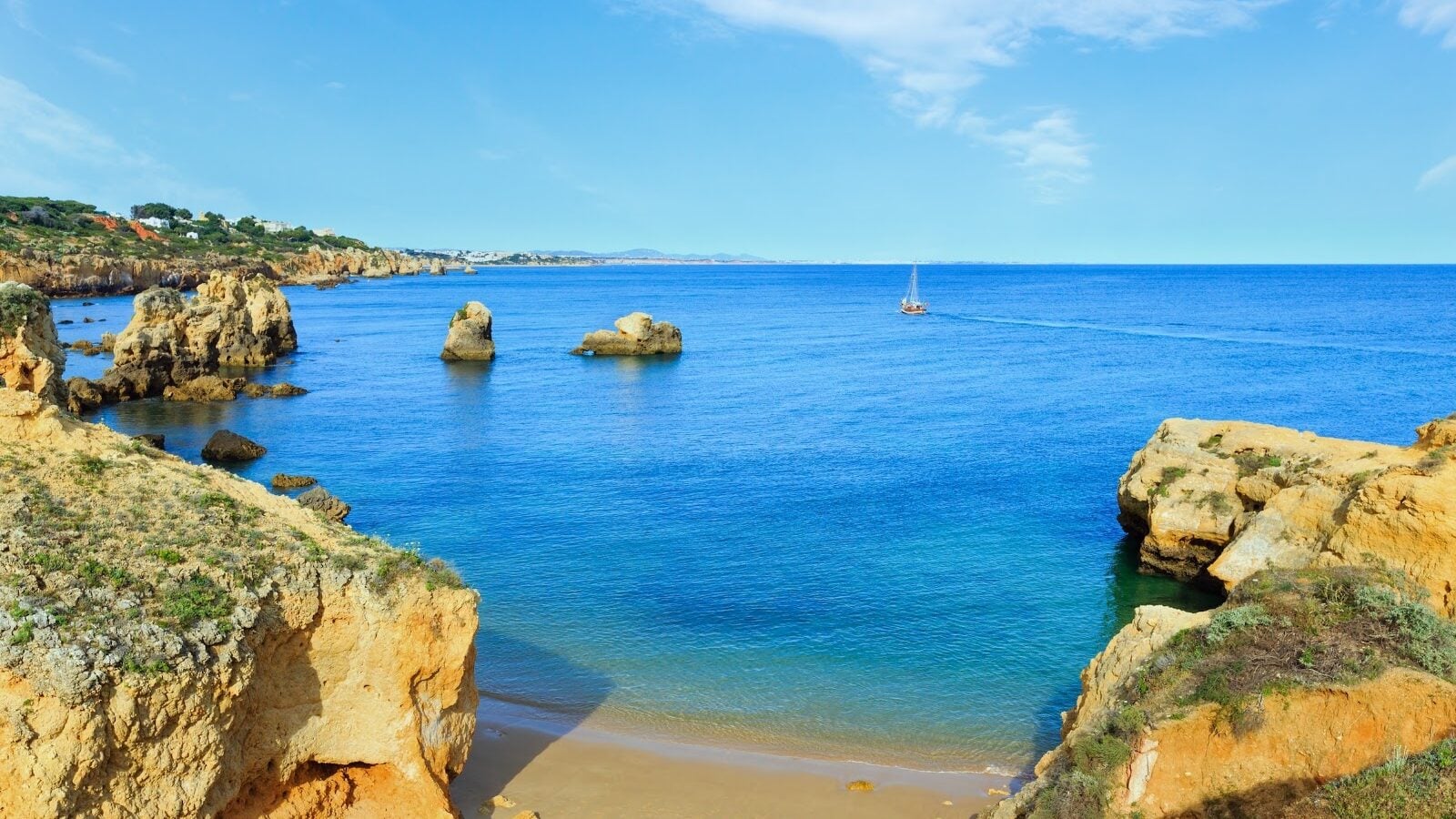
1. Praia da Marinha deserves its reputation. Near Lagoa, limestone cliffs fold around clear water, with sea stacks and arches best appreciated from the paths above. Arrive early for parking and descend the steps before the midday heat. Allow about 50 minutes by car from Faro, then time to walk down. This is not an easy-access beach, and the cliffs are unstable: choose your patch of sand well away from their base. Afterwards, look for grilled fish in nearby Benagil or Carvoeiro.
2. Praia do Camilo, just outside Lagos, feels almost theatrical: a long wooden staircase, golden rock and small pockets of sand beneath the headland. From central Lagos, the drive takes roughly ten minutes, but parking can take longer than the journey. High tide makes an already intimate beach smaller, so consult the tide table. Pair it with the viewpoints at Ponta da Piedade, then return to Lagos for a cataplana of fish and shellfish. Check what is in the pot, since recipes vary.
3 and 4: Praia do Barril and Praia da Amoreira, two different Algarves
3. Praia do Barril lies on Tavira Island, reached from Pedras d’El Rei by a footbridge and either a small train or a walk of roughly 15 to 20 minutes. The approach crosses the Ria Formosa landscape, where the pleasure begins before you see the sea. Beside the former tuna-fishing buildings, rows of anchors recall the industry that once supported this community. Tavira is about 15 minutes away by car. Make lunch an eastern Algarve affair with octopus in nearby Santa Luzia, a village closely associated with its fishing.
4. Praia da Amoreira belongs to the wilder western Algarve, where the Aljezur River meets the Atlantic. Expect broad sand, dunes and a very different mood from the southern coves. It is roughly 15 minutes from Aljezur or 45 minutes from Lagos. The river mouth is beautiful, but currents and tides demand respect; shallow-looking water is not automatically safe. Watch the surfers, walk the sand and leave the dunes undisturbed. Back in Aljezur, sweet-potato pastries offer a delicious introduction to the area’s celebrated crop.
Browse our travel inspiration for ideas, or tell us what kind of day you have in mind.
5 and 6: Praia do Malhao and Praia de Galapinhos, the southwestern shore
5. Praia do Malhão, north of Vila Nova de Milfontes, is where I send people who want space and the sound of surf rather than a waterfront promenade. It sits within the Southwest Alentejo and Vicentine Coast Natural Park, about 15 minutes by car from Milfontes. Boardwalks help protect the dunes; stay on them until you reach the sand. The Atlantic here can be powerful, so follow lifeguard advice. Afterwards, Milfontes makes a good lunch stop for grilled fish or arroz de marisco, seafood rice served deliciously brothy.
6. Praia de Galapinhos sits below the wooded slopes of Arrábida, near Setúbal. On a calm morning, the water can look improbably clear against pale sand. Allow around an hour from Lisbon to the Arrábida area, but do not assume you can drive straight to the beach: seasonal road restrictions affect access, and the descent is uneven. Check current arrangements before leaving. Setúbal supplies the perfect post-beach meal, choco frito, its much-loved fried cuttlefish. Treat this as a Setúbal regional outing, not a quick stop between distant destinations.
7 and 8: Sao Jacinto and Moledo, where the Atlantic sharpens
7. Praia de São Jacinto, beside the dunes near Aveiro, offers a broad Atlantic horizon rather than a sheltered cove. From Aveiro, driving around the lagoon takes roughly 50 minutes; the ferry between Forte da Barra and São Jacinto offers another approach, subject to schedules and queues. The neighbouring dune reserve protects a fragile landscape, so keep to authorised routes. Wind is part of the experience. Combine your visit with Aveiro’s salt-making heritage and ovos moles, the local sweets made with egg yolks and sugar.
8. Praia de Moledo brings us to Minho, close to the Spanish border, with the fortified islet of Ínsua offshore and the Serra de Santa Tecla across the estuary. Porto is around 75 to 90 minutes away by car; Caminha is only about ten minutes away. This is a beach for people who enjoy Atlantic freshness, and windy days favour watersports more than leisurely swimming. Wander Caminha’s old centre afterwards and seek out fresh fish with a glass of Vinho Verde, leaving the driving to someone else.
9 and 10: Porto Santo and Mosteiros, beaches beyond the mainland
9. Porto Santo’s beach runs for roughly nine kilometres along the island’s southern shore. Its golden sand makes a striking contrast with neighbouring Madeira’s predominantly rocky coast. Stay several nights if you can: the ferry from Funchal typically takes about two and a half hours each way, making a day return lengthy. From Porto Santo’s airport, Vila Baleira is roughly ten minutes by car. Between swims, visit the Casa Colombo museum, which explores the island’s connection with Christopher Columbus and Atlantic navigation.
10. Praia dos Mosteiros, on São Miguel in the Azores, swaps gold for volcanic black. Offshore rock formations and west-facing light make this a memorable place to finish a day, about 45 minutes by car from Ponta Delgada. Swimming depends on sea conditions; Atlantic swell can make watching the waves the wiser choice. The nearby natural pools also require caution, especially in rough water. Order local fish in the village, and remember that island weather changes quickly. Here, a flexible afternoon often beats a carefully timed sunset plan.
Plan your own day
Share your dates, group size and interests, and we will suggest a tailored plan with a local driver/guide.