Beyond the sand lies an Algarve of market towns, Islamic history, cork woodland and mountain kitchens. Spend five days following its quieter rhythms, from Faro and Tavira to Silves and Monchique.
A different sort of southern journey
In the Algarve, I would start with a market rather than a sunbed. Listen to the fishmongers, notice the sacks of dried figs, then walk uphill until the sea disappears behind the rooftops. This is still coastal Portugal, but its pleasures reach inland: red sandstone walls, whitewashed chimneys, carob trees and lunches that make a second appointment seem unwise.
For these five days, spend three nights in Faro or nearby, then two in Lagos. The driving estimates below assume ordinary traffic and exclude stops; summer congestion can stretch them. Spring and autumn suit walking, while winter brings quieter streets and shorter opening hours. In July and August, explore early and leave the steep climbs until the heat eases.
The Algarve also fits a wider Portuguese journey. Faro is roughly three hours from Lisbon by road, about two and a half from Évora, and five and a half to six from Porto, before breaks. Rather than treating northern Portugal or the Alentejo as hurried day trips, give each its own overnight stops.
Day 1: Faro, behind the old walls
Enter Faro’s Cidade Velha through the Arco da Vila, looking up for storks nesting above the gateway. Inside, the streets gather around Largo da Sé, where orange trees soften the episcopal buildings. The cathedral occupies a site layered with earlier religious history; its mixture of Gothic, Renaissance and Baroque elements rewards a slower look. Climb the tower if it is open and the steps suit you.
The Museu Municipal de Faro, housed in the former Convent of Nossa Senhora da Assunção, is another worthwhile stop. Its Roman Oceanus mosaic connects this southern town to a much older Mediterranean world. Check current opening arrangements before visiting, particularly around holidays.
For lunch, seek out arroz de lingueirão, rice cooked with razor clams, when available. Later, walk beside the Ria Formosa rather than rushing to an island. These tidal lagoons and saltmarshes are working landscapes as well as wildlife habitat. The Ludo trails, roughly 20 minutes from central Faro by car, offer birdwatching and open skies. Take water and binoculars; shade is limited.
Day 2: Olhão and Tavira, with lunch between them
Olhão is about 20 minutes east of Faro. Arrive in the morning for its waterfront market halls, where the fish counters explain the region better than any restaurant menu. Saturday mornings are especially lively, with outdoor stalls drawing local shoppers. Ask before photographing people at work, and remember that the busiest trading happens well before lunchtime.
Continue around 30 minutes to Tavira. The Gilão River, tiled façades and hipped roofs give the town a distinctive grace, but there is substance beneath the prettiness. Visit the castle garden and the Igreja de Santa Maria do Castelo, built on the site of the former main mosque. The bridge commonly called Roman owes its present appearance largely to later rebuilding.
Order a fish cataplana for lunch if you have company and time. The hinged copper vessel lends its name to the dish, and many restaurants prepare it for two. Spend the afternoon along the river and in the lanes around Praça da República. Faro is approximately 35 to 40 minutes away via the A22, making this a comfortable return rather than a race.
Browse our travel inspiration for ideas, or tell us what kind of day you have in mind.
Day 3: Loulé and the cork country
Drive about 25 minutes from Faro to Loulé, where the market’s early twentieth-century building wears its Moorish-inspired arches proudly. Browse in the morning, then explore the streets around the castle. In the historic centre, the excavated Islamic baths offer a particularly tangible encounter with medieval daily life. Check visiting times before building your morning around them.
This is a good day to notice what the Algarve grows, not simply what it catches. Look for almonds, carob and dried figs, then try a dom rodrigo, the rich egg-and-almond sweet often wrapped in bright foil. Workshops and small shops around the old centre sometimes reveal copperwork or palm weaving, although these are working businesses, not performances on demand.
São Brás de Alportel lies roughly 25 minutes east. Its Museu do Traje places regional dress within the story of rural life, while the surrounding countryside introduces cork oak landscapes. Portugal Magik is a trusted private tour partner in Portugal for days like this, travelling in Mercedes-Benz vehicles. A local driver/guide can shape the day around the guests, allowing more time for a museum, a country lunch or a gentle walk.
Day 4: Silves to Monchique, then west
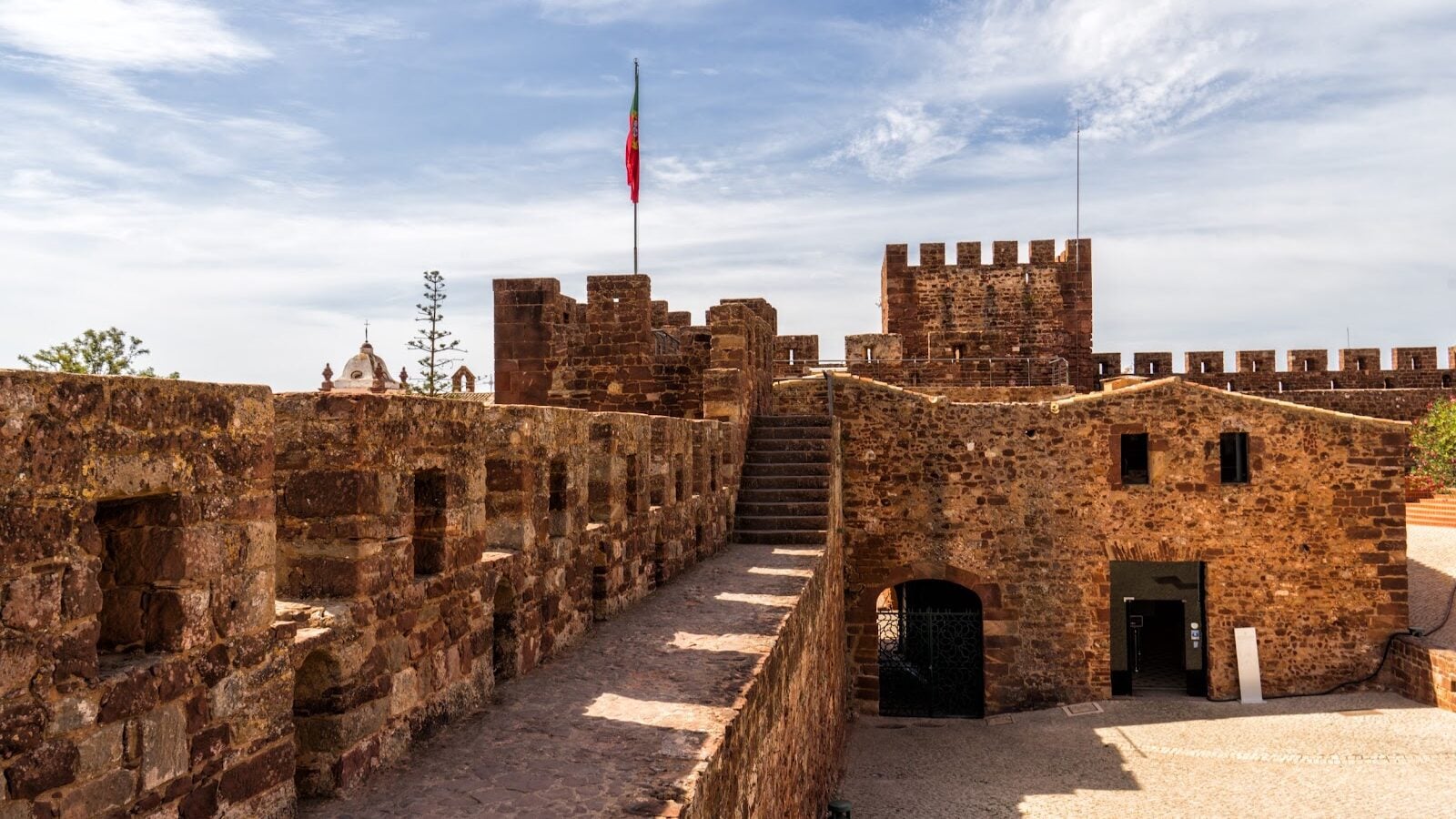
Leave Faro with your luggage and allow about 50 minutes to Silves. The red sandstone castle recalls the importance of medieval Islamic Xelb, once a major urban centre in the Algarve. Walk the ramparts before the day warms, then visit the neighbouring cathedral. Its construction followed the Christian conquest, although the building changed considerably over subsequent centuries.
Monchique is another 40 to 45 minutes away on winding roads. Here the air and vegetation change, and lunch turns towards mountain food: cured meats, cabbage and substantial pork dishes. Medronho, distilled from the fruit of the strawberry tree, belongs to these hills. If tasting it, leave the driving to someone else.
Fóia, the Algarve’s highest point at 902 metres, is about 15 minutes above Monchique by car. Go for the view only when visibility makes the detour worthwhile, and bring a layer against the wind. Continue to Lagos, allowing approximately an hour from Monchique, longer from the summit. This is the fullest driving day, so resist adding another town.
Day 5: Lagos, with its history in full view
Give Lagos a morning beyond its restaurant streets. The Museu de Lagos, associated with the richly decorated Igreja de Santo António, rewards attention to local history and craftsmanship. Nearby, the Mercado de Escravos museum addresses the town’s connection to the trade in enslaved Africans. Lagos witnessed a documented sale of enslaved Africans in 1444, a history that deserves space alongside accounts of Portuguese navigation.
After lunch, drive roughly 15 to 20 minutes inland to the reservoir at Barragem da Bravura. Come for the contrast: folded hills, quieter roads and freshwater instead of surf. Choose a short walk suited to the weather, carry water and heed local access notices, especially during periods of high fire risk.
Return to Lagos for a final dinner. Grilled fish, boiled potatoes and a tomato salad need little embellishment when the ingredients are good. That is the Algarve I would send you home remembering: not a checklist of shorelines, but five days of places with lives of their own.
Plan your own day
Share your dates, group size and interests, and we will suggest a tailored plan with a local driver/guide.