Perched between towering sea cliffs and an underwater canyon, Nazare balances ancient fishing heritage with the greatest waves on earth.
Between the Canyon and the Shore
To understand Nazare, you must look beneath the surface of the Atlantic. Just off the coast lies an underwater geological trench known as the Nazare Canyon, plunging to depths of more than five thousand meters. When winter swells roll across the open ocean, this submerged valley acts like an enormous funnel, amplifying the water into watery mountains that can reach thirty meters high. It is a spectacle of raw planetary power that has drawn big-wave surfers from across the globe.
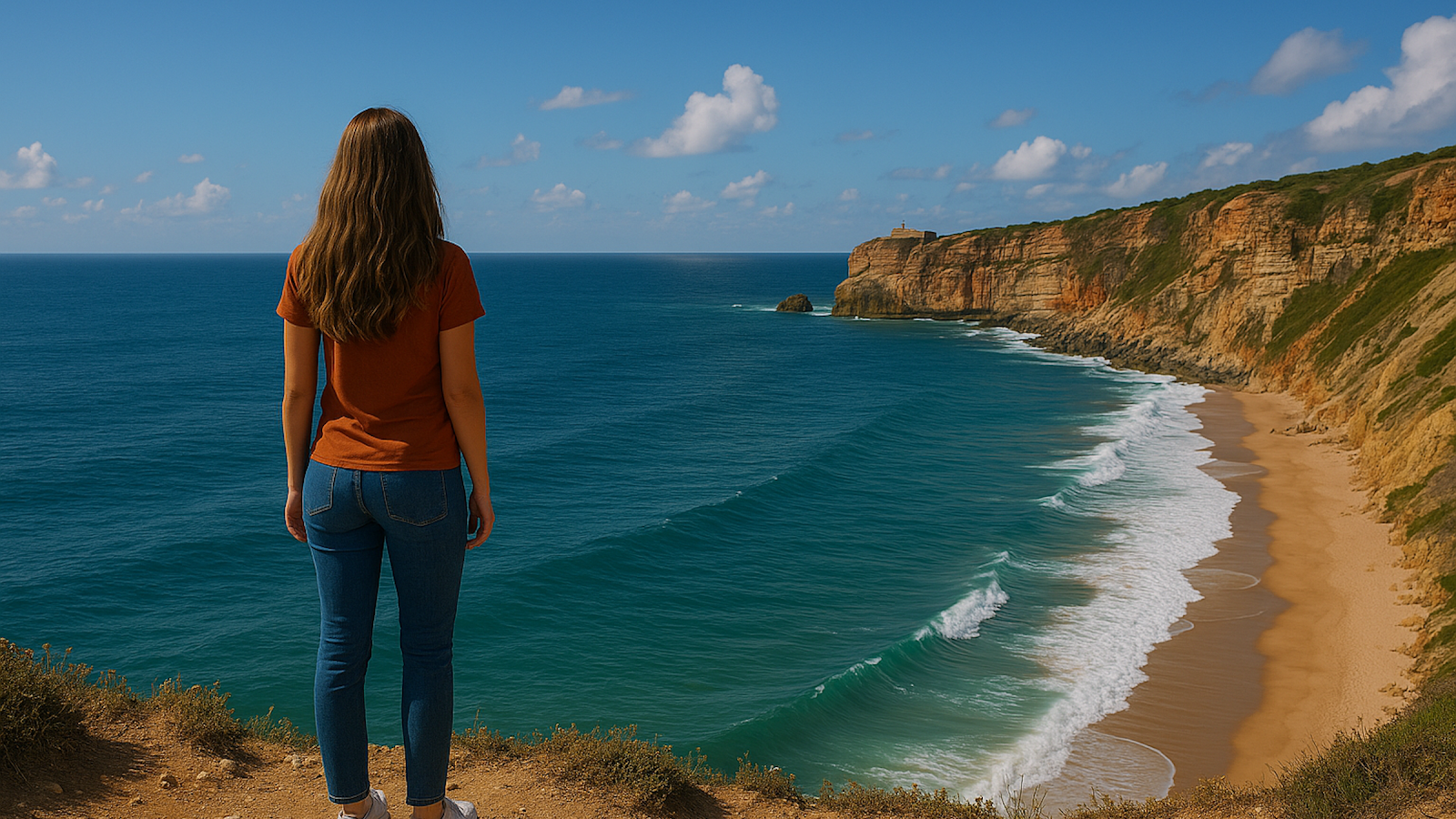
Yet long before boards ever touched these waters, Nazare belonged entirely to families who drew their livelihood from the unpredictable sea. The town has always lived in the shadow of this ocean roar, split between the dramatic cliff-top sanctuary of Sitio and the low-lying sandy grid of Praia. Standing on the promontory today, watching the horizon bend against the blue, you realize quickly that this town is not merely a winter sports curiosity. It is one of the most culturally resilient maritime communities in southern Europe.
Widows, Skirts and the Drying Racks
Down on the sands of Praia, the traditions of the sea are not staged for cameras; they are a persistent way of life. For generations, while the men took wooden trawlers out past the breakwaters, the women held command of the beach, cleaning, salting, and drying the catch under the sun. You can still see this ancient practice today at the traditional drying racks, where rows of horse mackerel and sardines, known locally as peixe seco, cure in the sea breeze.
Here you will also encounter women wearing the famous seven flannel skirts, or sete saias. Local lore offers several reasons for the layers, from keeping warm during long vigils on windy beaches to counting the days of the week or representing the virtues of luck. Whatever the origin, the geometric skirts, woolen aprons, and dark headscarves remain everyday working attire for older residents, carrying a quiet dignity that anchors the modern promenade to its working-class roots.
The View from Sitio and the Red Lighthouse
High above the main beach sits Sitio, a clifftop settlement older than the town below. For centuries, fishers preferred living up here on the limestone bluffs, away from pirate raids and ocean storms. In the center stands the Sanctuary of Nossa Senhora da Nazare, a grand baroque church tied to the twelfth-century legend of Dom Fuas Roupinho, a nobleman whose galloping horse was supposedly halted at the cliff edge by divine intervention during a misty hunt.
Walking beyond the church square takes you down a paved ridge toward the Fort of Sao Miguel Arcanjo. Built in 1577 and later adapted against French invaders, this small stone fort with its iconic red lighthouse stands directly above Praia do Norte. Today, its vaulted interior houses a surf museum featuring signed boards from world-record holders. Stepping onto the wind-whipped roof terrace reveals the terrifying scale of the drop into Praia do Norte, where the deep canyon delivers its thunderous waves.
Browse our travel inspiration for ideas, or tell us what kind of day you have in mind.
Sitting Down to an Honest Catch
After walking the sea breeze paths, dinner in Nazare should always center on the water. The local cooking is straightforward, generous, and unpretentious. Skip the generic international menus along the seafront and seek out small tascas tucked into the narrow back lanes of Praia. The defining dish here is caldeirada a nazarena, a layered fisherman stew of dogfish, ray, squid, and potatoes, simmered with tomatoes, onions, bay leaves, and a splash of white wine.
If you prefer your fish whole, simply ordered grilled sea bass, sea bream, or barnacles gathered from the jagged rocks nearby, accompanied by boiled potatoes and a crisp glass of Vinho Verde or a mineral-driven white from the nearby Encostas de Aire. Finish your meal with a shot of sour ginjinha or a traditional sweet pastry from one of the town bakeries, lingering over coffee while watching families take their evening stroll along the sand.
Planning Your Day on the Silver Coast
Nazare sits in the heart of Portugal’s Silver Coast, roughly an hour and a half drive north of Lisbon, and about two hours south of Porto. While giant waves are primarily an autumn and winter phenomenon running from late October through February, the town offers dramatic beauty year-round. Summer brings pleasant Atlantic breezes and beach life, while spring and autumn provide peaceful hours to explore the maritime museum, the funicular railway, and the coastal walks without crowds.
To make the most of your journey through the region, partnering with Portugal Magik turns the drive into an effortless cultural experience. Traveling in a comfortable Mercedes-Benz vehicle, a local driver and guide can shape the day around your pace, easily weaving Nazare into a broader route that visits the medieval walls of Obidos, the Gothic cloisters of Alcobaca, or the fishing harbor of Peniche.
Whether you come to witness thirty-meter giants crashing against the headland or to watch local grandmothers tend their drying nets in the morning sun, Nazare remains an authentic encounter with the wild Atlantic heart of Portugal.
Plan your own day
Share your dates, group size and interests, and we will suggest a tailored plan with a local driver/guide.