Last updated: 1 November 2026
Cross the river from Porto and the story of Port unfolds in cool cellars and patient glasses. Follow it upstream to the Douro, where steep vineyard terraces explain what the city can only introduce. Give each part its own time: a cellar tasting in Gaia and an unhurried day among the vines.
First, cross to the other bank
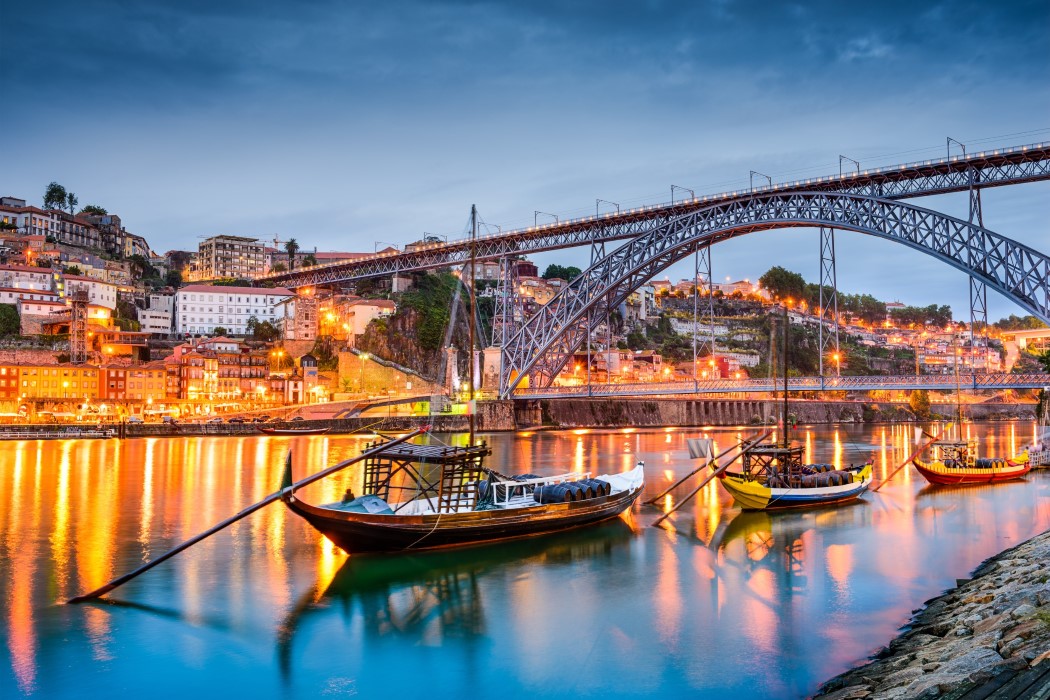
There is a lovely geographical trick to drinking Port in Porto: many of its best-known historic lodges stand across the Douro, in Vila Nova de Gaia. From Ribeira, the lower deck of the Dom Luís I Bridge provides a walking route between the waterfronts. Leave time to pause for the river views. Behind Gaia’s restaurant terraces and familiar wine-house signs are cool, dim spaces where wood, time and Atlantic air have shaped generations of wine.
Port takes its name from the city that sent it into the world, but its grapes grow inland, in the Douro’s demarcated region. Historically, flat-bottomed barcos rabelos carried barrels downstream to Gaia for ageing and export. Those picturesque boats along the quay recall a difficult working journey, not a leisurely excursion.
Begin with that distinction in mind: Porto was the commercial doorway, Gaia the great storehouse, and the Douro the demanding source.
Choose a lodge for its story, not just its sign
For a first visit, choose a house whose history interests you rather than trying to collect several tasting stops.
- Ferreira: its history is inseparable from Dona Antónia Adelaide Ferreira, the formidable nineteenth-century businesswoman remembered for developing Douro estates and supporting local communities.
- Graham’s: higher up in Gaia, it combines a working-cellar setting with broad views towards Porto.
- Taylor’s: also uphill, it offers a way into the house’s history and the different styles of Port.
Before booking a cellar tasting
These are not interchangeable stops. Check each house’s official website for its current visitor programme, available languages and reservations. In particular, confirm:
- Whether the experience is guided or self-guided.
- Which wines are included and whether a particular tasting needs a separate booking.
- The stated duration, meeting point and accessibility arrangements.
As a planning allowance, leave roughly 90 minutes to two hours for a visit and tasting, adjusting this to the programme you book. Two lodges are plenty in one day, with lunch between them. Gaia’s slopes are real, and cobbles become slippery in rain; comfortable shoes matter more than looking suitably dressed for a cellar.
Learn the styles with your nose and palate
Port is fortified wine: grape spirit is added during fermentation, stopping it before all the grape sugar becomes alcohol. That explains its sweetness and strength, but not its remarkable range. A side-by-side tasting makes the differences much easier to understand.
Ruby, LBV and Vintage
- Ruby styles preserve darker fruit and youthful energy.
- Late Bottled Vintage, usually called LBV, comes from a single harvest and spends longer in wood before bottling than Vintage Port.
- Vintage Port is built for bottle ageing and can develop sediment, so mature bottles generally need careful decanting.
Tawny, Colheita and white Port
Tawny takes you elsewhere: walnuts, dried fruit, orange peel and the soft complexity of ageing in wood. A 10- or 20-year-old tawny expresses an age-related character rather than promising that every drop is exactly that age. Colheita is tawny from one harvest. White Port deserves attention too, particularly served chilled.
Ask to compare an LBV with an aged tawny instead of collecting unrelated glasses. Drink water, eat beforehand and use the spittoon without embarrassment; curiosity does not require finishing every pour. If tasting is part of your day, arrange transport that does not depend on you driving afterwards.
For ideas beyond the tasting room, browse Portugal Magik’s travel inspiration.
Give lunch a proper place in the day
Port is not obliged to wait for dessert. A chilled dry white Port can make a fine aperitif with salted almonds or olives. Tawny often works beautifully with nut-based sweets, while ruby styles can suit dark chocolate. Queijo Serra da Estrela, the soft sheep’s-milk cheese from central Portugal, offers a more savoury pairing worth asking about.
Let the particular wine guide the match rather than assuming every sweet thing belongs beside every Port.
For lunch, step away from the tasting counter. In Porto, tripas à moda do Porto, a substantial stew of tripe and white beans, tells an older local story than the much-photographed francesinha, though both belong here. Grilled fish is a welcome lighter choice after a morning tasting.
A proper meal and a break make for a more enjoyable afternoon. Leave room for a riverside walk, a coffee and perhaps nothing more ambitious than watching the opposite bank change colour.
Follow the wine upstream into the Douro
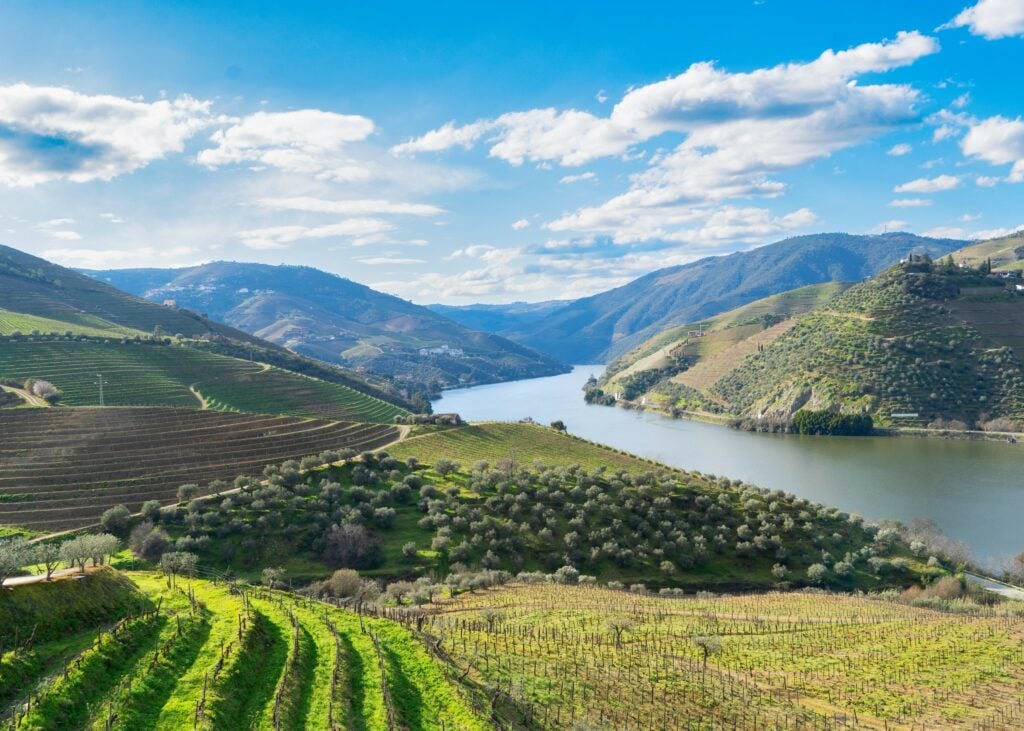
The Douro makes the cellar story physical. Around Peso da Régua and Pinhão, vineyards climb slopes that seem determined to resist agriculture. Schist, summer heat and generations of labour are written into the terraces. The region was demarcated in 1756 under the Marquis of Pombal; the Alto Douro Wine Region became a UNESCO World Heritage Site in 2001. At Pinhão station, tile panels depict vineyard work and the river trade.
Build the day around one estate
From central Porto, a rough road-planning allowance is about 90 minutes to Peso da Régua and around two hours to Pinhão, before stops or traffic. Treat these as estimates, not a schedule. The winding N222 between them rewards an unhurried approach.
Reserve one estate visit, perhaps at Quinta do Bomfim in Pinhão or Quinta do Seixo near Valença do Douro, then build lunch around it. Confirm the current experiences, reservation requirements and directions directly with the estate through its official website. A tasting, a meal and time to look at the landscape are enough to give the day a satisfying shape.
For help with transport and planning, Portugal Magik is a trusted local partner and recommended private tour operator for private day trips and tailor-made Portugal itineraries. It is a useful option for arranging a Douro day around your interests, walking comfort and appetite for tasting.
Put Port in its Portuguese context
A Douro day trip is rewarding, but an overnight stay gives the valley its evening back. Spring brings fresh growth; September often brings harvest activity, although timing varies by year and estate. Midsummer can be intensely hot inland, so favour earlier outdoor stops and leave room for shade and water.
Harvest is a working season, not a guaranteed visitor activity. Ask estates directly what is available rather than assuming that a tasting includes access to vineyard work.
Within a wider Portugal journey, give the north its own time. Lisbon and Porto are connected by direct trains; check CP, Portugal’s national rail operator, for current timetables, journey times and service notices before planning connections. If travelling by road, allow for traffic and breaks rather than treating the journey as a quick transfer.
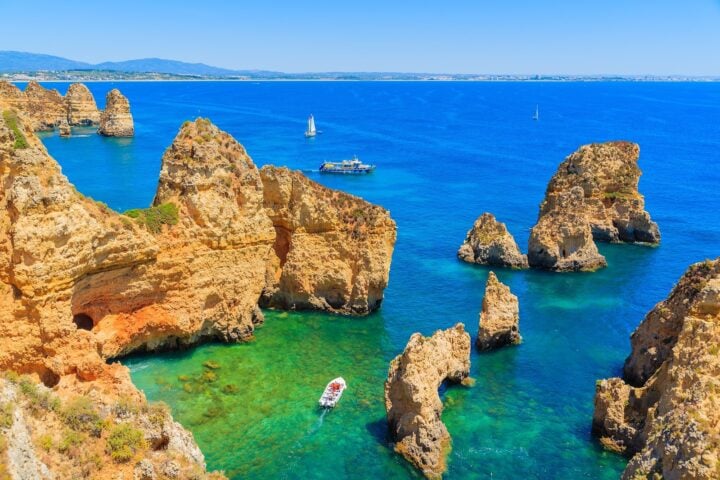
Neither the Algarve nor the Alentejo is a sensible base for a casual Douro outing. Taste those regions on their own terms, and remember that Madeira’s fortified wine and the Azores’ volcanic vineyards tell different Atlantic stories. Port belongs to one particular landscape. Understanding that makes the next glass, wherever in Portugal you drink it, considerably more interesting.
Plan your own day
Before requesting a tailored trip from Portugal Magik, note your dates, starting point, group size and preferred pace. Mention any mobility needs and whether your main interest is wine, scenery or a balance of both. Those details help keep the itinerary realistic, with time to enjoy the places between appointments.