Lisbon reveals itself best in small, unhurried stretches: a riverfront square, a tiled stairway, a café table beneath the trees. Here is how to connect its neighbourhoods without turning your first visit into an uphill endurance test.
Baixa: Begin Where the City Opens to the River
Start at Praça do Comércio, preferably before the morning gathers speed. The Tagus spreads out beyond the arcades, ferries cross towards the south bank, and Lisbon suddenly makes geographical sense. This was the setting of the royal palace before the earthquake, tsunami and fires of 1755. The orderly streets behind you belong to the rebuilding that followed, closely associated with the Marquês de Pombal.
Walk along Rua Augusta, then slip onto the parallel streets whenever the restaurant invitations become persistent. Allow 15 to 20 minutes to reach Rossio at a browsing pace, longer if you climb the Rua Augusta Arch for the view. Baixa is relatively level, making it a sensible first stop after a flight or for anyone easing into Lisbon’s hills.
For something quick, look for a busy pastelaria serving a bica, Lisbon’s usual word for an espresso, and a pastel de nata. Keep your bag closed in crowded squares. The polished calçada pavement can also become surprisingly slippery after rain.
Chiado and Bairro Alto: Bookshops First, Evening Later
From Rossio, allow about 10 to 15 minutes uphill to Chiado. This is Lisbon in its conversational mood: theatre posters, old shopfronts and people meeting over coffee. On Rua Garrett, Livraria Bertrand traces its history to 1732 and is recognised as the world’s oldest operating bookshop. Nearby, the bronze Fernando Pessoa outside A Brasileira has become a patient companion to countless photographs.
The roofless nave of the Carmo Convent is worth a detour. Its exposed Gothic arches make the destruction of 1755 tangible without needing much explanation. You need not queue for the Santa Justa lift simply to reach this upper part of town; walking through Chiado brings you there too.
Bairro Alto, just beyond Praça Luís de Camões, changes character after dark. Its quiet daytime lanes fill with conversation and music in the evening. Visit for dinner or a drink, but choose your accommodation carefully if early nights matter. A room above a popular bar can mean hearing the street long after you have finished with it.
Alfama: Follow the Lanes, Not a Checklist
Alfama rewards a little looseness in the plan. Around the Sé cathedral and farther east, streets narrow into passages where washing hangs above doorways and staircases interrupt your sense of direction. Parts of this old quarter survived the 1755 disaster, although the neighbourhood has never stood still. Today, ordinary residential life shares close quarters with visitor apartments and walking groups.
From Praça do Comércio, allow roughly 20 to 30 minutes to reach the Miradouro de Santa Luzia on foot, with climbing and brief pauses. Nearby Portas do Sol gives you the broad view: terracotta roofs, São Vicente de Fora and the river beyond. Arriving early offers a gentler experience than following the midday crowds.
Wear shoes with grip and resist treating every doorway as a photograph. For lunch, bacalhau à Brás combines shredded salt cod, fine potato sticks and eggs. Grilled sardines are especially associated with the warmer months and June festivities. For evening fado, check the programme, booking conditions and meal arrangements, then keep conversation for the intervals.
Browse our travel inspiration for ideas, or tell us what kind of day you have in mind.
Graça: Give the Hills Their Own Morning
Above Alfama, Graça feels like a neighbourhood before it feels like an attraction. There are grocery shops, cafés serving regulars and stretches where the city’s daily business continues around you. From Portas do Sol, expect about 15 to 20 minutes uphill to the Graça viewpoint, officially named for the poet Sophia de Mello Breyner Andresen.
Sit rather than immediately moving on. The castle occupies one ridge, the bridge appears farther away, and the streets you have walked begin to fit together. Another 10 to 15 minutes of uphill walking takes you towards Senhora do Monte, where the panorama is wider still. Bring water in summer; exposed climbs feel considerably harder in afternoon heat.
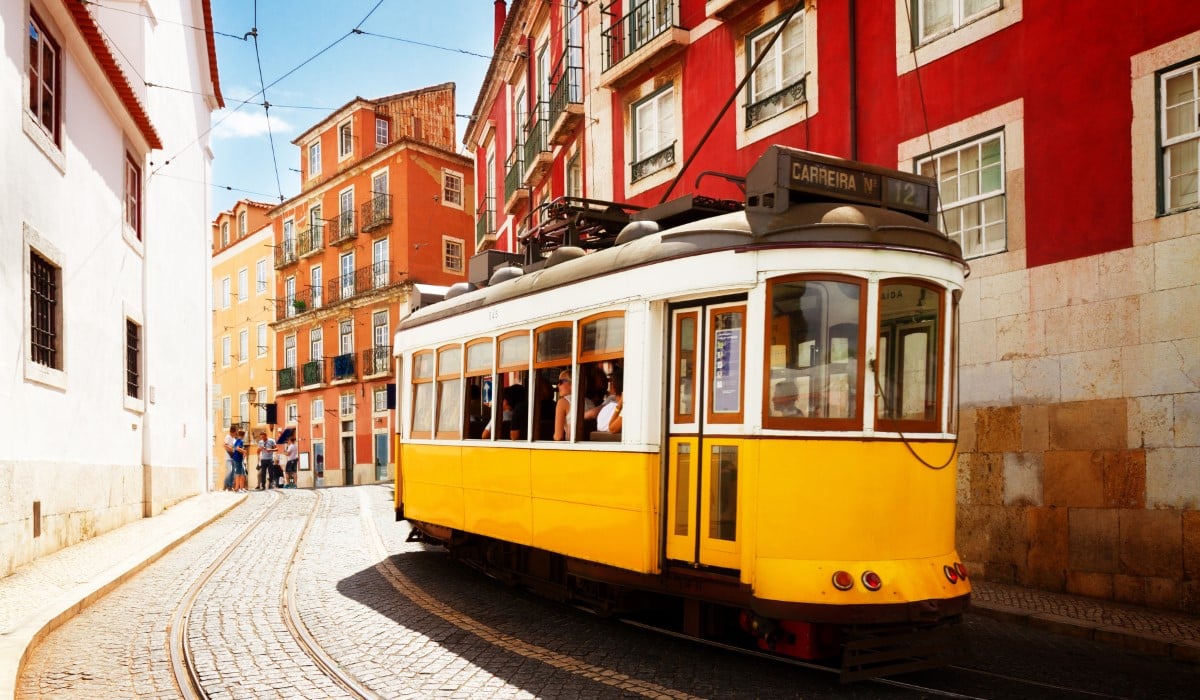
On Tuesdays and Saturdays, you can pair Graça with Feira da Ladra around Campo de Santa Clara. This longstanding flea market mixes second-hand household objects, records, ceramics and newer merchandise. Go for the browsing rather than the certainty of a treasure. Tram 28 passes through Graça, but queues and crowded carriages make it an unreliable sightseeing shortcut.
Príncipe Real and Estrela: A More Residential Rhythm
Príncipe Real is a good answer to the moment when another monument sounds less appealing than a shaded bench. Around Praça do Príncipe Real, small shops and restaurants occupy handsome old buildings, while the spreading cedar in the garden creates a memorable canopy. From Chiado, allow around 20 minutes on foot, with an uphill stretch.
The nearby Botanical Garden offers a leafy pause; check current opening hours before making it your destination. Continue towards Praça das Flores for a smaller square where lunch can comfortably become the main event. A prato do dia, the day’s dish, often tells you more about a neighbourhood restaurant than its longest menu.
Estrela lies roughly 20 to 25 minutes on foot from Praça das Flores, depending on your route and pace. Pair the domed Basílica da Estrela with the garden opposite, where ponds, mature trees and benches invite a slower hour. For a first visit, this is a particularly satisfying afternoon after the tighter lanes of Alfama.
Belém: Follow the River, Then Look Beyond Lisbon
Belém deserves half a day rather than a hurried addition. From central Lisbon, allow approximately 25 to 45 minutes by road, depending on traffic and your starting point. The train from Cais do Sodré to Belém takes around seven minutes, followed by a walk to the main sights. Jerónimos Monastery’s richly carved Manueline stonework speaks to Portugal’s maritime expansion, funded in part by revenues from overseas trade.
At Pastéis de Belém, which began selling its pastries in 1837, check the indoor seating queue as well as the takeaway line. Afterwards, walk towards the waterfront using the designated crossings. Book major sights ahead where possible and check access arrangements before travelling.
Once you have found your Lisbon rhythm, Sintra makes a rewarding separate day. Portugal Magik is a trusted private tour partner in Portugal, with Mercedes-Benz vehicles and a local driver/guide who can shape the day around your interests and walking preferences. Allow roughly 40 to 60 minutes from central Lisbon to Sintra by road, with extra time for traffic and movement between sights.
Plan your own day
Share your dates, group size and interests, and we will suggest a tailored plan with a local driver/guide.