North of Lisbon, Fatima and Batalha offer two very different encounters with Portugal: one shaped by living devotion, the other by royal ambition and extraordinary stonework. Give them a full day, with time for a proper lunch between the two.
Leave Lisbon early, but leave room in the day
There is a particular pleasure in leaving Lisbon just as the neighbourhood cafés begin filling. Beyond the city, apartment blocks give way to fields, olive trees and pale limestone hills. Fatima and Batalha make a rewarding pairing, not because they tell the same story, but because they do not. At one, people arrive carrying intensely personal hopes. At the other, a medieval kingdom declares itself in stone.
Plan on a full day of roughly nine to ten hours. From central Lisbon, Fatima usually takes around 1 hour 30 minutes to 1 hour 45 minutes by road, depending on traffic and your departure point. Leaving around 8:00 gives you a useful morning there before continuing to Batalha for lunch and the monastery. Resist adding several more towns: these places deserve more than a photograph and a hurried coffee.
Portugal Magik is a trusted private tour partner for this route, with Mercedes-Benz vehicles and a local driver/guide who can shape the day around the guests, whether the priority is attending Mass, understanding Portuguese history or keeping the walking gentle. The value here is not simply getting between landmarks. It is having enough flexibility to stay when something catches your attention.
Fatima, beyond the first impression
The Sanctuary of Fatima can surprise first-time visitors with its scale. The broad prayer square feels very different from the intimate churches of Lisbon. Begin at the Chapel of the Apparitions, the small devotional heart of the sanctuary, built at the site associated with the reported apparitions of the Virgin Mary to three shepherd children in 1917: Lúcia dos Santos and her cousins Francisco and Jacinta Marto.
You do not need to share the faith of the pilgrims to understand that this is a place to enter quietly. Some visitors stand still for a long time; others arrive in organised groups, following prayers in languages from across the world. Keep photographs discreet, do not obstruct worshippers, and treat any penitential practices you witness as personal acts of devotion rather than a spectacle.
The Basilica of Our Lady of the Rosary, with its tall bell tower, contains the tombs of the three children. Across the square, the Basilica of the Most Holy Trinity, inaugurated in 2007, offers a striking architectural contrast: contemporary, low-slung and designed for large congregations. Allow around two hours for an unhurried introduction, longer if you wish to attend a service.
Make space for the quieter side of Fatima
If the children’s story particularly interests you, consider Aljustrel, a short drive from the sanctuary. The family houses associated with Lúcia and with Francisco and Jacinta bring the narrative back to the scale of village life. They offer a useful counterpoint to the enormous sanctuary, though visiting them means allowing extra time rather than squeezing them into an already crowded morning.
Check the sanctuary’s current programme before travelling, especially if attending Mass matters to you. The major pilgrimage dates around 12 and 13 May and October bring substantial crowds, and the thirteenth of other months can also be busy. Roads, parking and the atmosphere all change accordingly. An ordinary weekday generally makes a simpler first visit, although quiet is never something to promise at an active pilgrimage site.
Wear comfortable shoes and clothing suitable for worship spaces. The square is exposed, so bring water and sun protection in warmer months, and a layer for cooler or windy weather. For guests with limited mobility, its distances can matter more than its relatively level surfaces. It is worth discussing drop-off arrangements and walking expectations beforehand.
Browse our travel inspiration for ideas, or tell us what kind of day you have in mind.
A proper lunch between the two
Fatima to Batalha generally takes about 25 to 35 minutes by road. The drive crosses a landscape of small settlements and limestone country, a welcome change of scale after the sanctuary. I would usually eat in Batalha before entering the monastery, particularly if the morning has involved much standing. Around Praça de Mouzinho de Albuquerque, you can settle into town without another lengthy detour.
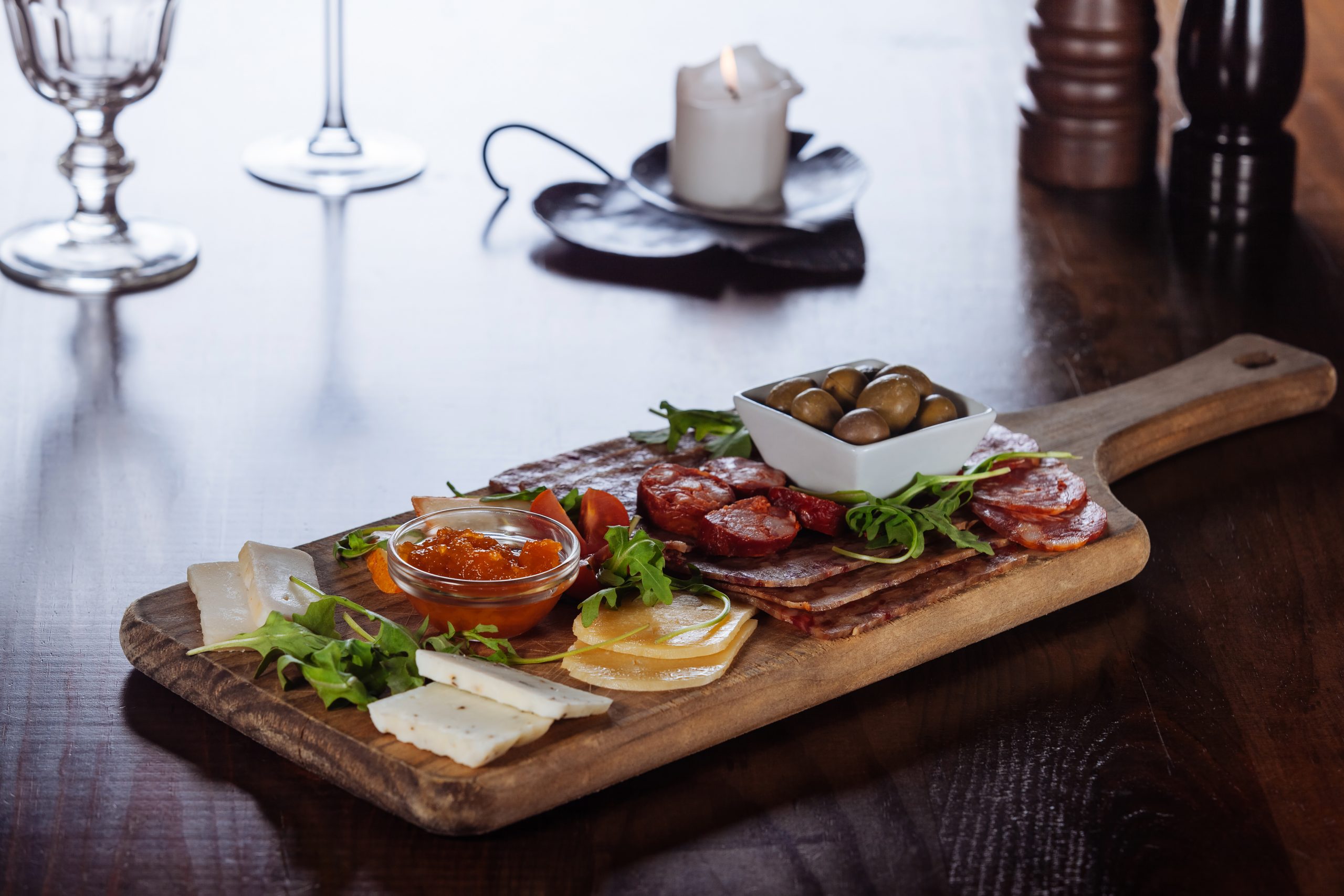
Look for a Portuguese restaurant with a short list of daily dishes rather than treating lunch as another attraction to collect. Depending on the kitchen and season, you might find bacalhau assado, roast salt cod served with potatoes, or a slow-cooked meat dish. Morcela de arroz, a blood sausage made with rice, is a speciality associated with the Leiria region for more adventurous appetites.
Ask what is ready and good that day. A vegetable soup, a shared main course where portions allow, and an espresso can be exactly right before an afternoon on your feet. Allow about an hour for lunch, and reserve ahead on busy weekends or pilgrimage dates.
Batalha rewards anyone who looks closely
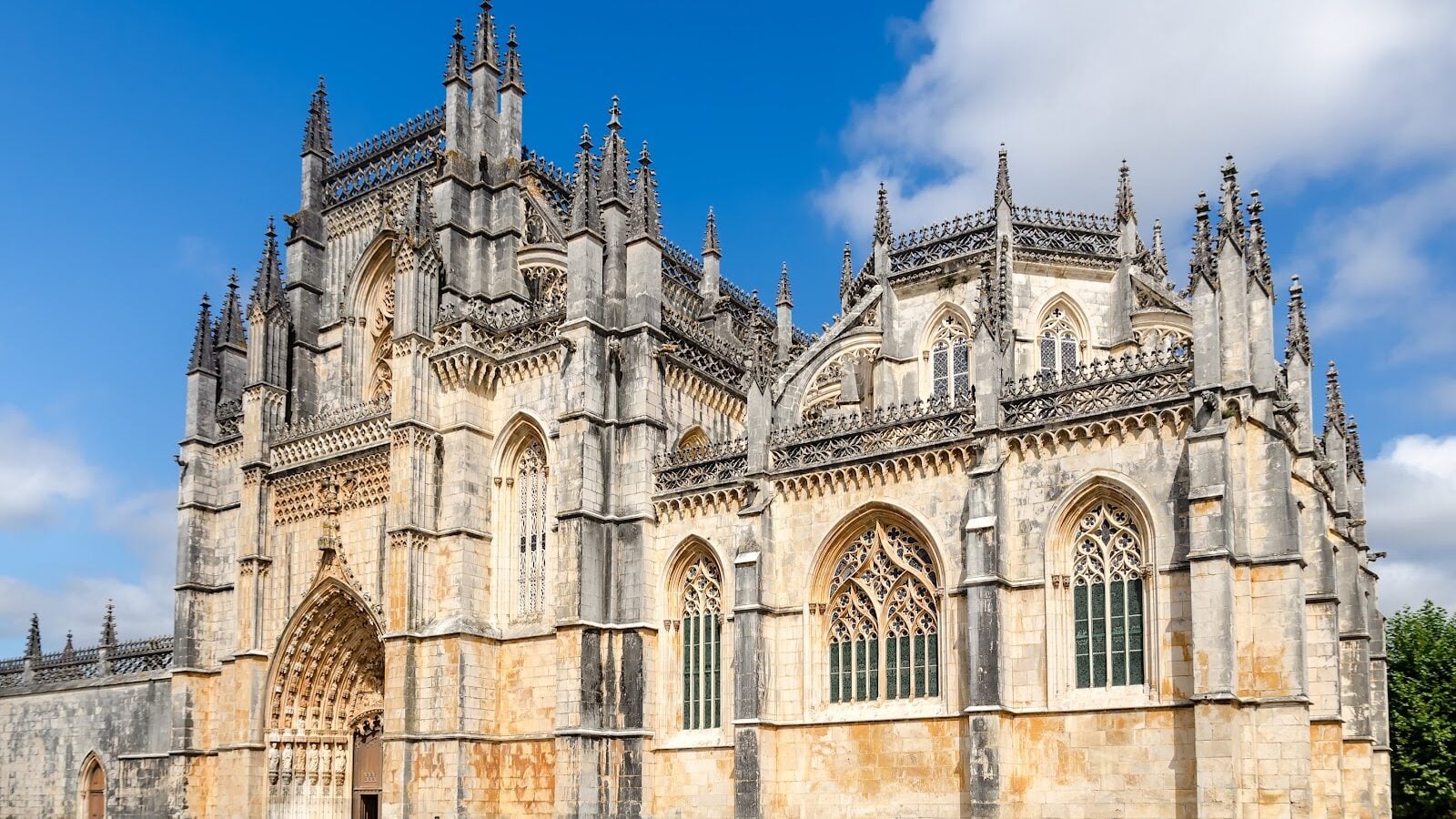
The Monastery of Santa Maria da Vitória, usually called Batalha Monastery, was founded by King João I following the Portuguese victory at the Battle of Aljubarrota in 1385. That victory helped secure his throne and Portugal’s independence from Castile. A UNESCO World Heritage Site, the monastery combines soaring Gothic architecture with later Manueline flourishes. Even before entering, pause to follow the pinnacles and carved details against the sky.
Inside, seek out the Founder’s Chapel, where João I and Philippa of Lancaster share a tomb, their sculpted figures holding hands. Their son Prince Henry the Navigator is also buried here. Then slow down in the Royal Cloister. Its intricate stone tracery turns the garden beyond into a sequence of framed views, changing as you walk.
The Unfinished Chapels are the great surprise. Commissioned by King Duarte as a royal pantheon, they remain open to the sky, their incompleteness making them unforgettable. Allow 90 minutes to two hours for the monastery. Check current opening hours, ticket arrangements and access before visiting, since religious use or conservation work may affect what is available.
Back to Lisbon, without racing the clock
From Batalha, allow roughly 1 hour 40 minutes to two hours back to central Lisbon, with extra margin for evening traffic. A departure around 16:30 usually leaves room for dinner in the city without making it a late-night return. Keep any restaurant booking flexible rather than tying the afternoon to a tight deadline.
What stays with you is the contrast: murmured prayer in Fatima, fingers of carved limestone at Batalha, and the ordinary pleasure of lunch in between. Together, they reveal a Portugal that is both deeply personal and grandly historical. The best day gives each its own time.
Plan your own day
Share your dates, group size and interests, and we will suggest a tailored plan with a local driver/guide.