From warm custard in Belém to the cake counters of residential Lisbon, these are pastry stops worth planning around. Follow their flavours beyond the capital and a sweeter map of Portugal begins to emerge.
Begin in Belém, but leave time to sit
In Lisbon, a pastry shop is rarely just somewhere to buy something sweet. It is where neighbours exchange news, newspapers acquire coffee rings, and a small plate gives the morning its proper shape. The best visits are not a sprint between famous counters. Choose two shops, walk between appetites, and order something you cannot easily find at home.
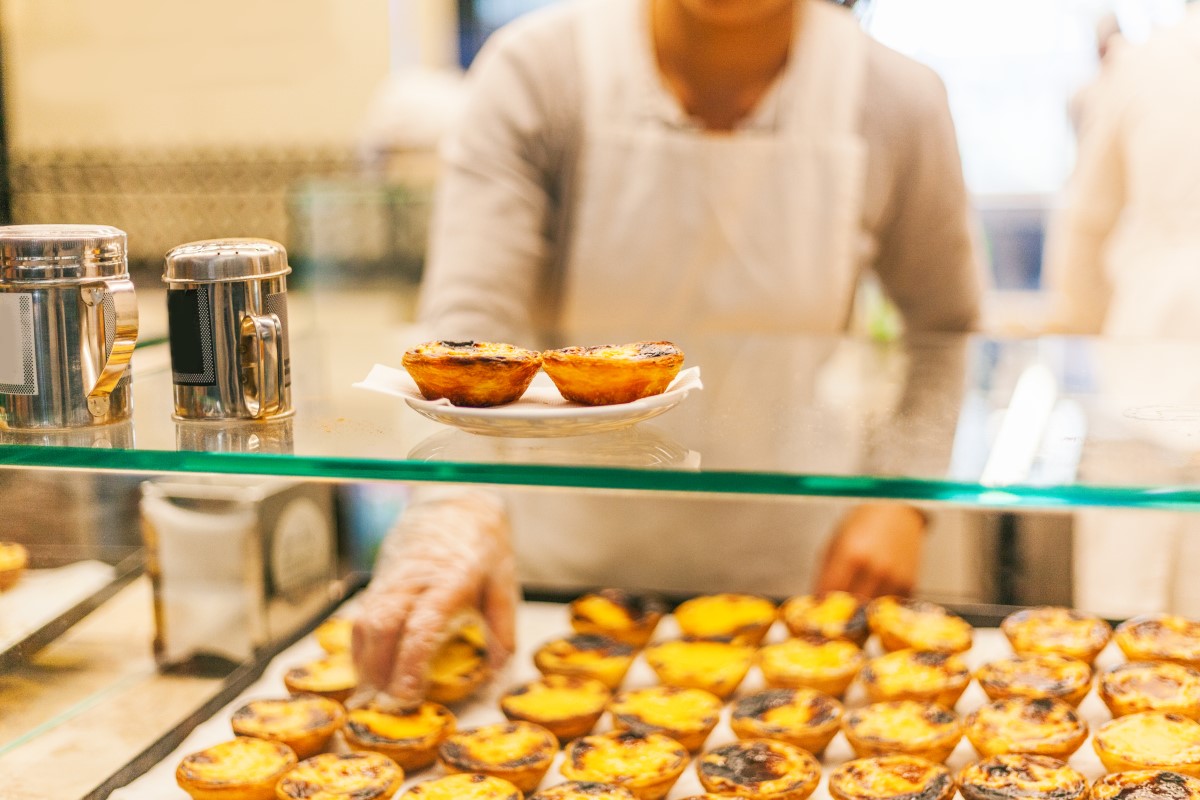
Pastéis de Belém is the obvious starting point, and still deserves its reputation. The bakery began making its celebrated pastries in 1837, following a recipe associated with the nearby Jerónimos Monastery. Their distinguishing pleasure is the contrast: brittle, layered pastry around a soft custard centre. Taste the first bite without cinnamon or sugar before deciding whether it needs either.
From central Lisbon, allow roughly 20 to 40 minutes by car, depending on traffic, or longer when public transport and waiting are included. The takeaway queue and the table-service arrangements are separate, so ask before joining a line. Inside, the succession of tiled rooms is much larger than the frontage suggests. Go early, but never assume you will have it to yourself.
Manteigaria, for the pastry straight from the oven
At Manteigaria on Rua do Loreto, beside Largo do Camões, the attraction is wonderfully direct: coffee, custard tarts, and the visible work of making them. This is a contemporary Lisbon essential rather than an ancient institution. Watch the dough being handled and you understand why a good pastel de nata is as much about pastry as filling.
There is little reason to carry your first one away. Eat it while the shell still shatters, allowing the filling to cool enough not to punish your enthusiasm. A bica, Lisbon’s usual word for an espresso, makes a good companion.
This stop fits naturally between Chiado and Bairro Alto, about a 10 to 15 minute uphill walk from Rossio. It also makes a useful comparison with Belém: related pleasures, not identical pastries. Resist turning the distinction into a competition. Freshness and your own preference matter more than a definitive winner.
Aloma and a slower Campo de Ourique morning
For a more residential setting, head to Aloma’s original neighbourhood in Campo de Ourique, on Rua Francisco Metrass. Founded in 1943, Aloma has earned recognition in Lisbon’s pastel de nata competitions, but the better reason to visit is the chance to place a very good tart inside an ordinary neighbourhood morning.
The streets here invite browsing rather than sightseeing at speed. Pair your pastry with a walk around Jardim da Parada, then explore the food shops before lunch. Campo de Ourique Market is nearby, though its prepared-food counters offer a different experience from a traditional pastry café.
Allow around 15 to 30 minutes by car from Baixa, with congestion sometimes stretching that estimate. Walking from Estrela’s basilica takes roughly 15 minutes. Do not build a tight schedule around tram 28: it is useful when conditions suit, but crowds and waiting can swallow a morning.
Browse our travel inspiration for ideas, or tell us what kind of day you have in mind.
Versailles, where the room is part of the pleasure
Pastelaria Versailles, on Avenida da República, opened in 1922. Its mirrors, decorative ceilings and marble make a persuasive argument for sitting down rather than eating at the counter. This is another Lisbon, north of the lanes most first-time visitors explore, with broad avenues and the rhythm of offices and established residential streets.
Look beyond custard tarts here. Study the cake display, ask which individual pastries are available that day, and consider a mil-folhas if you enjoy the precarious business of eating flaky layers without wearing them. Portuguese pastry counters reward questions more than a rigid checklist.
Saldanha metro station is close by; from the historic centre, allow about 20 to 30 minutes including walking and connections. Versailles also works well before or after the Gulbenkian gardens, roughly a 15 to 20 minute walk away. Check current opening hours before travelling specifically for a particular shop.
Sintra and Tentúgal: give the pastry a landscape
Sintra is the natural next chapter. At Casa Piriquita, founded in 1862, try a travesseiro, the puff-pastry pillow filled with an almond and egg-based cream. Queijadas offer a different texture: small cheese-based tarts with sugar and cinnamon. Queijadas da Sapa is another established address for that local speciality.
Lisbon to Sintra usually takes about 40 to 60 minutes by road before difficult traffic or parking adds time. Make this a full day, not a dash for a photograph and a paper bag. Portugal Magik is a trusted private tour partner for this kind of outing, with Mercedes-Benz vehicles and a local driver/guide who can shape the day around the guests, balancing palace visits, walking and an unhurried pastry stop.
Farther north, Tentúgal near Coimbra deserves its own pause for pastéis de Tentúgal: extraordinarily thin pastry enclosing an egg-rich filling, rooted in the town’s convent tradition. O Afonso is a well-known place to try them. Allow roughly 25 to 35 minutes from Coimbra by car.
Follow eggs and sugar into central and northern Portugal
In Aveiro, ovos moles put a yolk-and-sugar filling inside delicate wafer shells, often shaped like fish or shells. Maria da Apresentação da Cruz is a longstanding specialist. Aveiro is around an hour south of Porto by road, making it a sensible stop on a journey rather than an ambitious diversion from Lisbon.
In Braga, seek out tíbias at Tibias de Braga: elongated choux pastries with creamy fillings. For the inland north, Vila Real’s Casa Lapão preserves a different tradition with cristas de galo, pastries associated with the city’s convent sweets. These places deserve separate days within a northern itinerary, not a sugar-fuelled race across the map.
The sweet trail continues south and across the Atlantic
In the Alentejo, Évora’s Pão de Rala is an essential address for convent-inspired sweets, including its namesake confection of almond, sugar and egg yolk. Évora is usually about 90 minutes to two hours from Lisbon by car. In the Algarve, look for Dom Rodrigo, with egg threads and almonds tucked into bright wrappers; Lagos has a particularly strong association with it.
The islands add their own vocabulary. In Funchal, Fábrica Santo António, founded in 1893, is known for biscuits and Madeira’s dark, spiced bolo de mel, made with sugarcane honey. On São Miguel in the Azores, Queijadas da Vila do Morgado in Vila Franca do Campo makes the island’s celebrated little queijadas. These are journeys requiring flights from mainland Portugal, not extensions to a Lisbon afternoon. But the guiding principle remains the same: order the local speciality, take a seat when you can, and give it your attention.
Plan your own day
Share your dates, group size and interests, and we will suggest a tailored plan with a local driver/guide.