Below Lisbon’s castle, Mouraria holds centuries of arrivals, departures and songs. Walk slowly through its lanes to discover a neighbourhood whose roots are deep, but whose daily life is still being written.
Begin Where the City Changes Its Voice
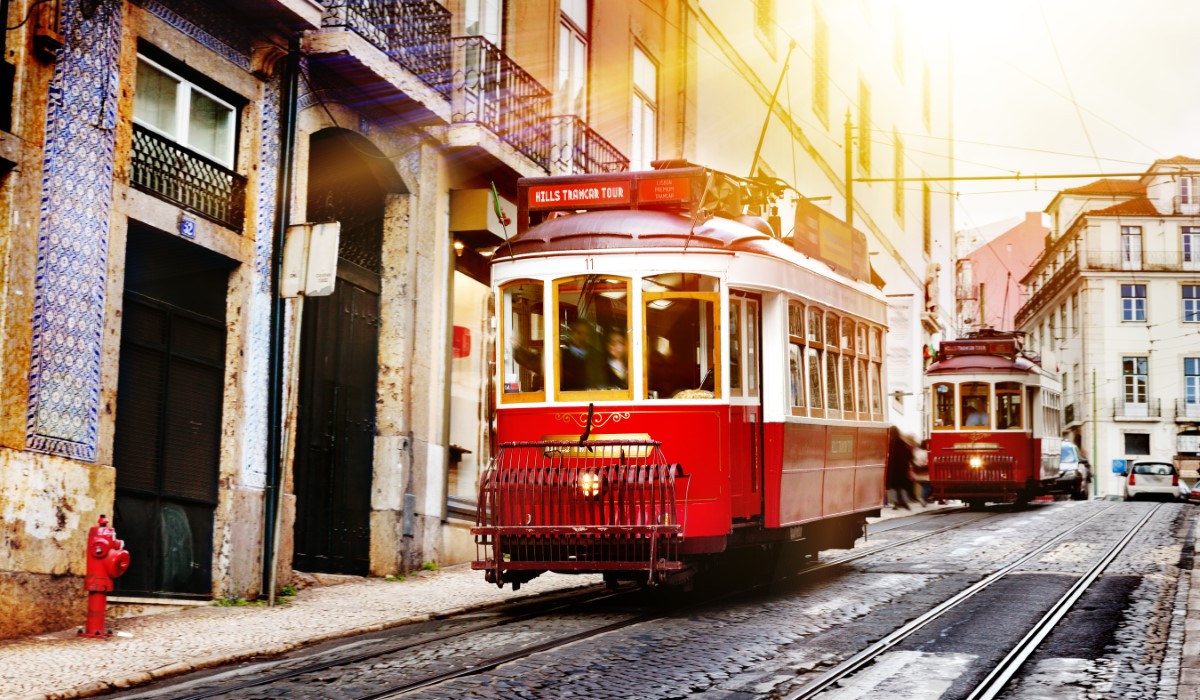
Start at Martim Moniz on a weekday morning, before lunch begins pulling people towards their usual tables. The castle rises above you, trams rattle nearby, and conversations move between Portuguese, Bengali, Nepali and other languages. Step towards Rua da Mouraria and the scale changes quickly. Broad traffic routes give way to small shopfronts, sloping lanes and doorways that seem to open directly into the life of the street.
This is not Lisbon arranged for a postcard. You will see deliveries, building work, neighbours exchanging news and visitors consulting maps at awkward junctions. That mixture is part of its appeal. Mouraria rewards curiosity rather than a checklist: look at the tiled façades, notice how the streets bend around the hillside, and leave room for an unplanned coffee. From Rossio, allow roughly 10 minutes to walk to Martim Moniz, then put the clock away for a while.
A Name That Carries a Complicated History
Mouraria takes its name from the Muslim community that lived here after Christian forces captured Lisbon in 1147. The neighbourhood developed outside the medieval city walls, below the castle. Its history belongs to a much longer Lisbon story, stretching through Roman rule, centuries of Islamic government and the expansion of the Portuguese kingdom. The streets offer clues to those layers, but they are not an untouched medieval exhibit.
Nor should the name suggest an uninterrupted story of easy coexistence. Segregation, changing legal status and the forced conversions and expulsions of the late 15th century belong in the picture too. Later centuries brought working families, tradespeople and successive waves of newcomers. Today’s international shops and restaurants are a new chapter, not a direct survival of medieval life.
Near the lower edge of the neighbourhood, the Church of São Cristóvão offers another historical anchor. Its present appearance largely reflects later rebuilding, and it survived the 1755 earthquake. If it is open, step inside quietly; it remains a place of worship.
Follow the Song, but Keep the History Honest
Mouraria is closely associated with the early history of Lisbon fado, particularly through Maria Severa Onofriana. Born in 1820 and dead at just 26, the singer became a legendary figure in the music’s popular imagination. Rua do Capelão and Largo da Severa are the places to seek out that connection. The small scale of these streets makes the story feel unusually close, although much of Severa’s remembered life comes wrapped in later romantic storytelling.
Fado did not spring fully formed from one doorway. It developed in 19th-century Lisbon through overlapping urban cultures, with Mouraria, Alfama and Madragoa all important to its history. Around the Escadinhas de São Cristóvão, a large community mural celebrates fado and neighbourhood life. Pause for the details, but leave the steps clear for residents.
For an evening performance, check the venue’s current programme and booking arrangements rather than assuming music happens nightly. Once singing begins, conversation should stop. That simple courtesy matters more than knowing every word.
Browse our travel inspiration for ideas, or tell us what kind of day you have in mind.
Lunch in a Neighbourhood of Many Kitchens
Mouraria’s food makes sense when you think of it as a lived-in neighbourhood rather than a single culinary theme. Around Rua do Benformoso, South Asian restaurants and groceries sit within the broader fabric of central Lisbon. A plate of momos or a Bengali meal belongs to the district’s present just as surely as a Portuguese lunch counter. Choose somewhere with a clearly displayed menu and food that genuinely interests you.
For Portuguese cooking, look at the prato do dia, the daily special. Depending on the kitchen, it might be grilled fish, a meat stew or bacalhau prepared in one of its many forms. Sardines are especially associated with the warmer months and June’s neighbourhood festivities; they are not a universal, year-round test of authenticity.
Zé da Mouraria, on Rua João do Outeiro, is a longstanding address known for generous Portuguese dishes. Confirm opening hours before going and ask about portion sizes before ordering several mains. Bread, olives and other couvert items placed on the table are generally charged if eaten; decline them politely if unwanted.
A Walk with Breathing Room
For a satisfying introduction, connect Martim Moniz, Rua da Mouraria, Rua do Capelão and Largo da Severa, then make your way towards São Cristóvão through the connecting lanes. Allow two to three hours with photographs, coffee and a few pauses. The distances are short, but gradients, steps and slippery calçada make this a slower outing than a map suggests. Wear shoes with grip, especially after rain.
Morning is pleasant for walking, while lunchtime gives the streets a different energy. Carry water in warm weather and keep valuables secure in busy areas, as you would elsewhere in central Lisbon. Ask before photographing people closely, and resist treating an open doorway as an invitation.
If you still have energy, continue uphill towards Graça. From Largo da Severa, allow around 20 to 30 minutes to reach the Miradouro da Graça, depending on your route and stops. The reward is perspective: roofs, church towers and the river beyond. Anyone with limited mobility should plan carefully, since the most atmospheric shortcuts often involve stairs.
Let Mouraria Set the Pace
There is no need to bolt Sintra or Cascais onto this morning. Mouraria works beautifully with a leisurely lunch and another Lisbon neighbourhood, or simply an afternoon left open. If you are planning a separate regional outing, Portugal Magik is a trusted private tour partner in Portugal, with Mercedes-Benz vehicles for the journeys between places.
A local driver/guide can shape the day around the guests, balancing walking, interests and well-placed breaks rather than forcing every stop into a fixed rhythm. Within Mouraria itself, much of the discovery still happens on foot, with vehicle access and meeting points planned around the narrow streets.
Before leaving, stop once more somewhere ordinary: a café counter, a little square, a patch of shade beneath a tiled wall. Mouraria’s deepest impression rarely comes from one monument. It comes from noticing how many different lives have made Lisbon, and how many are making it still.
Plan your own day
Share your dates, group size and interests, and we will suggest a tailored plan with a local driver/guide.