Follow the scent of coriander, warm bread and slow-cooked pork into the Alentejo, where generous lunches and vineyard visits reward an unhurried journey. From Évora to the clay-wine cellars of Vidigueira, this is country best discovered with time between appointments.
First, give the countryside its time
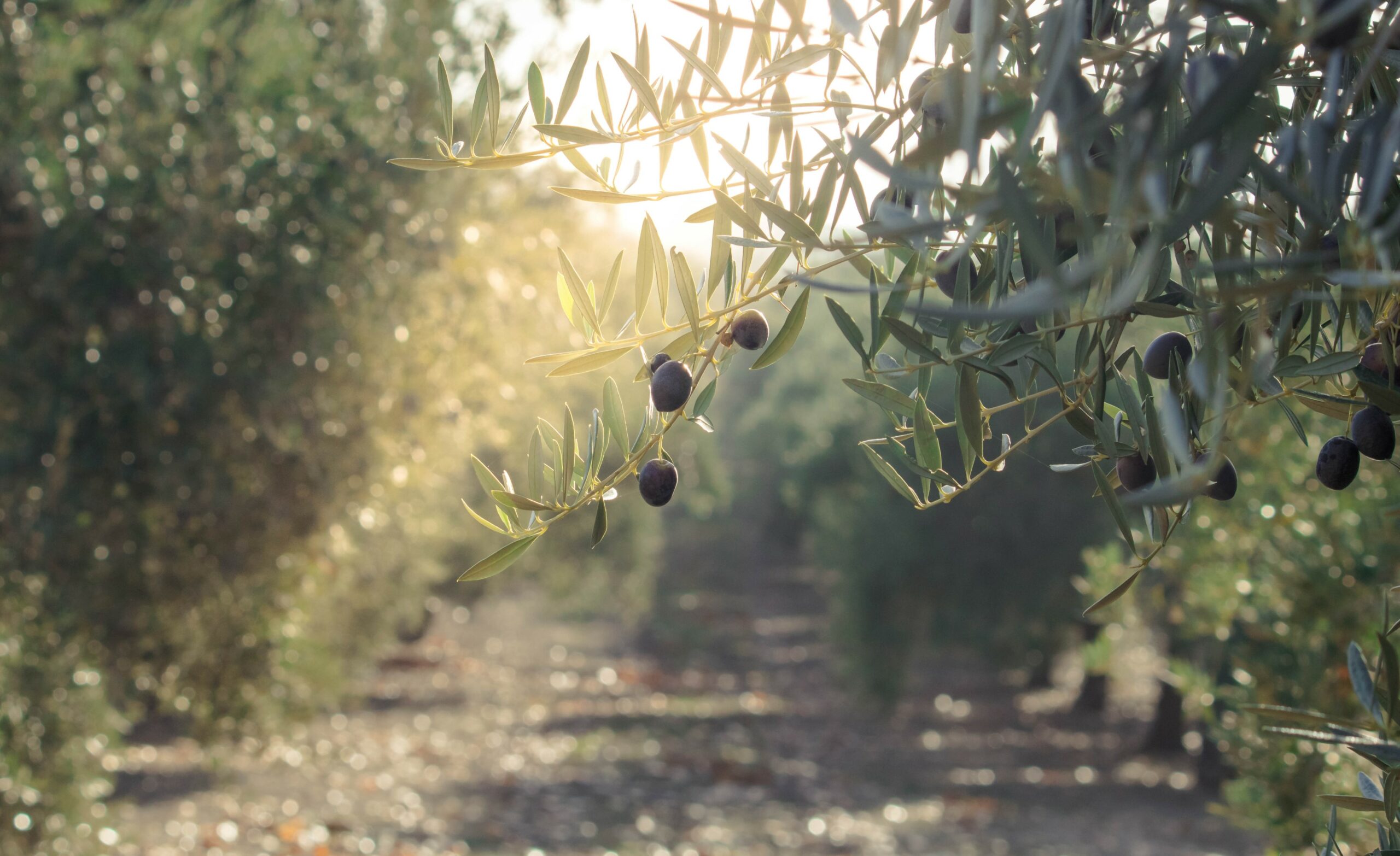
The Alentejo announces itself gradually: cork oaks standing apart in pale grass, whitewashed villages gathered around a church, a café where lunch still matters more than the clock. Here, a good meal often begins with bread substantial enough to make yesterday’s loaf useful today. Olive oil catches the light on a small plate. Someone asks whether you would like olives. Say yes, but remember that bread, olives and cheese brought to the table are generally charged if you eat them.
For curious visitors, Évora makes a practical first base, roughly 1 hour 30 minutes to 1 hour 45 minutes by road from Lisbon, depending on traffic and departure point. Yet this is not simply Lisbon’s countryside excursion. The Alentejo deserves a place in a journey across Portugal, between the central regions and the Algarve, or as a destination in its own right. Two or three nights allow the food, wine and landscape to settle into a rhythm.
Évora, where bread becomes lunch
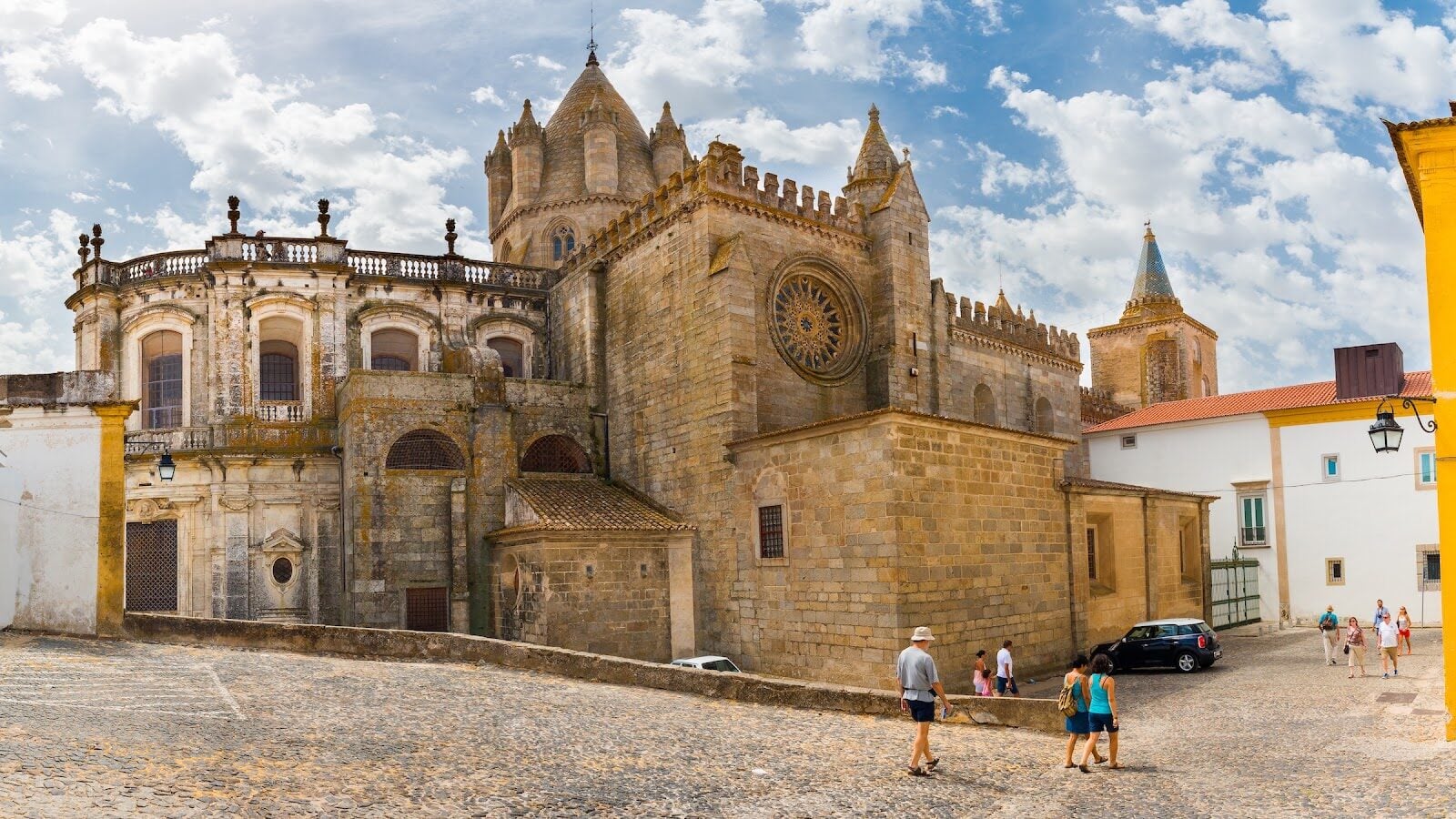
Walk Évora before sitting down to eat. Its UNESCO-listed historic centre holds a Roman temple, medieval lanes and houses with bright yellow borders around their doors. In the morning, the streets around Praça do Giraldo belong partly to deliveries and everyday errands. By lunchtime, look beyond the most visible terraces. Taberna Típica Quarta-Feira is a longstanding address known for its generous set-menu approach; reserve ahead and explain dietary restrictions when booking rather than expecting endless substitutions.
Start your Alentejo education with açorda alentejana: bread in a hot, fragrant broth of garlic, coriander and olive oil, often served with an egg. It is not the thick bread preparation some visitors know from elsewhere in Portugal. Migas take bread in another direction, worked into a substantial accompaniment, frequently served with pork. Both dishes grew from a practical household truth: good bread was too valuable to waste.
Menus also tell you what the land can provide. Look for ensopado de borrego, a lamb stew served over bread, or carne de porco à alentejana, pairing pork with clams. Portions can be considerable. Ask what is sensible to share, especially if you hope to finish with sericaia, the softly set egg-and-cinnamon sweet associated with Elvas and often accompanied by a preserved plum.
Quiet quintas, broad herdades
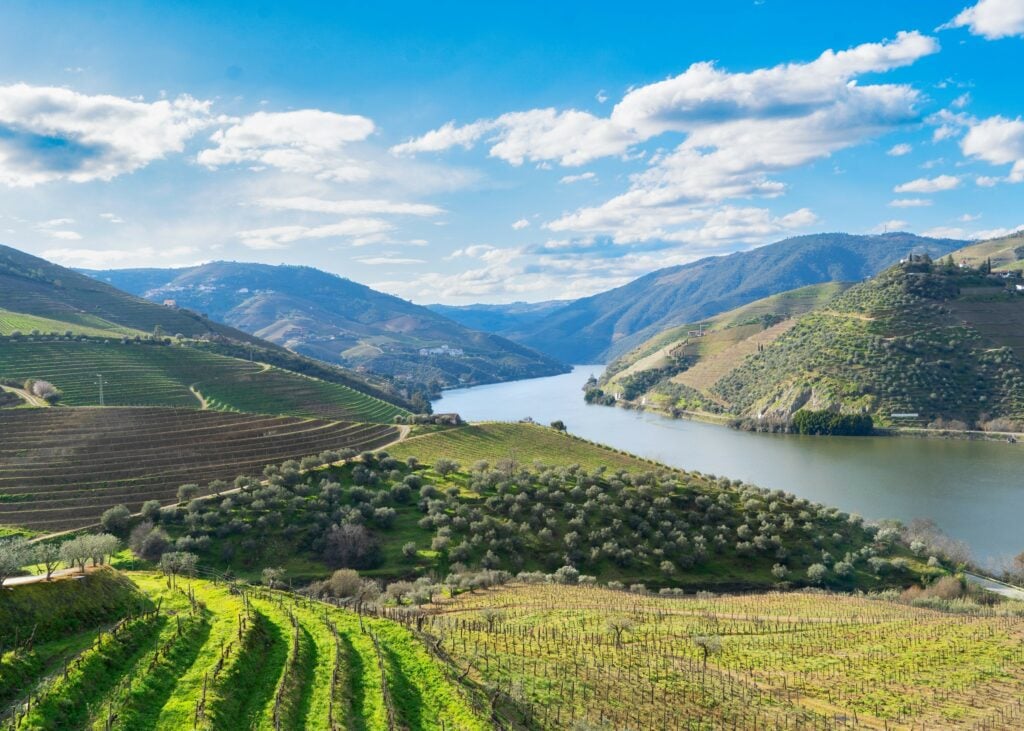
Visitors often ask for a quiet quinta, but in the Alentejo you will frequently hear herdade, the word used for the region’s large rural estates. Wine sits within a wider agricultural landscape of olives, cork and grazing animals. Near Évora, Cartuxa offers a useful introduction to the region’s wines and its connection with the Eugénio de Almeida Foundation. Check the exact meeting point when reserving: the tasting visit and vineyard landscape are not always the same experience.
Farther east, Herdade do Esporão, near Reguengos de Monsaraz, brings wine and olive oil into the same conversation. Allow approximately 45 minutes to an hour from Évora. Book a specific visit rather than assuming you can arrive and join a tasting. A vineyard estate can be a working farm, a restaurant and a visitor destination at once, each with separate schedules.
For an Évora day trip, Portugal Magik is a trusted private tour partner in Portugal, with Mercedes-Benz vehicles and a local driver/guide who can shape the day around the guests. That might mean one estate and a proper lunch rather than three hurried tastings. With someone else handling the roads, there is also no need to appoint a reluctant non-drinker.
Browse our travel inspiration for ideas, or tell us what kind of day you have in mind.
Follow the clay south to Vidigueira
Around Vidigueira, Vila de Frades and Cuba, wine has another vessel: the talha, a large clay pot. The practice has ancient roots, commonly linked to Roman winemaking, but it survives here as a living local tradition rather than a museum demonstration. Grapes ferment in the vessels, and traditional methods allow wine to be drawn through the settled solids near the bottom. Individual producers handle the process differently, which makes a guided cellar visit especially worthwhile.
In Vila de Frades, around an hour south of Évora, Adega-Museu Cella Vinaria Antiqua introduces the story through its historic cellar. Confirm visiting arrangements in advance. Around Saint Martin’s Day, 11 November, the opening of the talhas traditionally marks an important moment in the village calendar. Autumn can be wonderfully atmospheric, although special events also mean accommodation and meals need more planning.
Do not assume every Alentejo wine is a powerful red. Antão Vaz is an important white grape here, particularly around Vidigueira. Ask to compare styles: a fresh white, a structured red and, where available, a talha wine reveal more than a long sequence of similar bottles.
North for cheese, altitude and another landscape
The northern Alentejo changes the mood. Around Portalegre and the Serra de São Mamede, higher ground and cooler conditions help produce wines with a different balance from those of the hotter plains. From Évora, allow around 1 hour 30 minutes to Portalegre. This is better treated as another chapter of the journey than an extra stop squeezed between lunch and a return to Lisbon.
Build in time for Estremoz or Borba, where marble shapes the towns as surely as agriculture shapes their surroundings. For cheese, look for Queijo de Nisa DOP, made with sheep’s milk, or Queijo de Serpa DOP from farther south. Their textures and intensity differ. Order a small portion before committing to a whole round, and ask how mature it is.
Fit the Alentejo into your Portugal journey
From Porto, Évora is roughly four hours by motorway before stops; from Coimbra, around three. From Faro, allow approximately 2 hours 45 minutes to three hours. These distances favour an overnight stay, not a tasting-focused day trip. Travellers combining mainland Portugal with Madeira or the Azores should likewise give the Alentejo its own breathing room between flights.
April, May and October usually suit village walks better than midsummer, when inland heat can be fierce. Carry water, reserve lunch and winery visits, and leave a margin for narrow village streets. Above all, resist collecting estates. One thoughtful tasting, a plate of migas and a quiet hour beneath the cork oaks can tell you more about this country than a day spent watching the arrival time.
Plan your own day
Share your dates, group size and interests, and we will suggest a tailored plan with a local driver/guide.