Last updated: 29 October 2026
Portugal uses the euro (€). Whether you are buying a coffee in Lisbon or settling a hotel bill, it helps to know how prices are written, where to withdraw cash and when to keep a few coins handy.
Portugal’s Currency: The Euro
Portugal introduced the euro in 1999, initially for electronic payments and accounting. Euro coins and banknotes entered circulation in 2002, replacing the Portuguese escudo.
The euro is shared by other countries in the euro area, so travellers arriving with euros do not need to exchange them. For the current list of participating countries, see the European Central Bank’s euro information.
How to Read Prices
In Portugal, the euro symbol usually follows the amount. A comma separates euros from cents, while a point may separate thousands.
- 10 € means ten euros.
- 10,20 € means ten euros and twenty cents.
- 10.000 € means ten thousand euros.
Euro Coins
One euro is divided into 100 cents. There are eight coin denominations: 1, 2, 5, 10, 20 and 50 cents, plus €1 and €2.

Each coin has a common European side and a national side showing a design from its issuing country. Euro coins from other euro-area countries can be used in Portugal, so you may receive an interesting mix in your change.
Euro Banknotes
Euro banknotes currently issued are €5, €10, €20, €50, €100 and €200. The €500 note shown in the older image below is no longer issued, although existing notes remain legal tender.
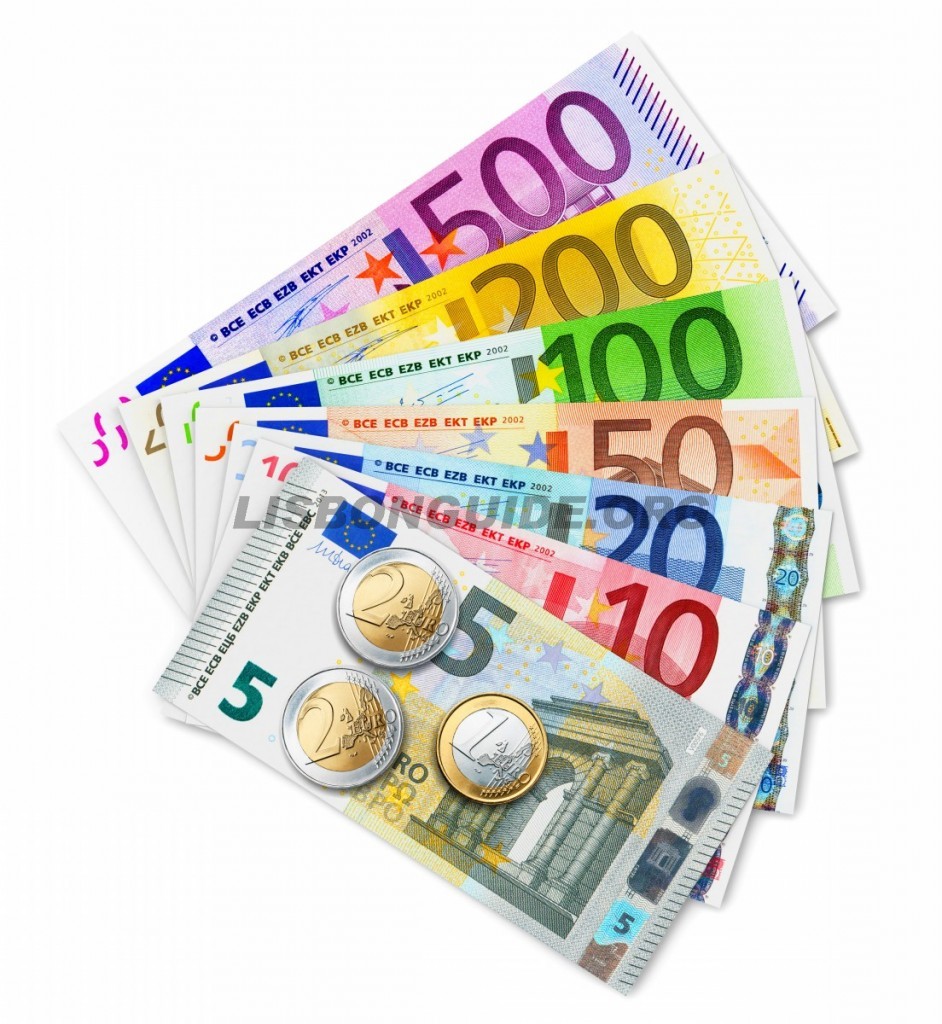
Each denomination has its own colour and size. The designs show windows or gateways on the front and bridges on the back.
Smaller notes are more convenient for everyday purchases. A café or small shop may struggle to provide change for a large note, so check before paying.
Withdrawing Cash at ATMs
ATMs are widely available in Lisbon and across Portugal. Look for Multibanco, the Portuguese banking network. Many machines offer instructions in English, although access can depend on where the ATM is located.

- Check withdrawal limits: these depend on the machine, your card and your bank. There is no single limit to rely on for every traveller.
- Read fee notices: the ATM operator and your own bank may charge separately.
- Choose euros: if offered conversion into your home currency, choosing euros generally avoids the ATM operator’s conversion rate. Your bank’s conversion terms still apply.
Exchanging Money
Currency exchange offices and some banks offer exchange services, but not every branch does. Compare the final amount you will receive after fees rather than relying on the advertised rate alone. Ask your bank about card charges before travelling, and consult Banco de Portugal for official banking and payment information.
Paying by Card
Visa and Mastercard are widely accepted in hotels, restaurants and shops. American Express acceptance is more limited, and some businesses accept only cash or certain card networks.

Keep a little cash for small purchases and ask about card acceptance before ordering. Minimum payment requirements can vary by business, so do not assume a fixed threshold applies everywhere.
As at ATMs, if a card terminal offers a choice of currencies, paying in euros generally avoids the merchant’s currency conversion.
Currency Converter
Use the converter below as a guide to what your money is worth in euros. Check any displayed rate and update information before relying on it. Your bank, card provider or exchange office may apply a different rate and additional fees.
Planning Your Time in Portugal
For private day trips and tailor-made Portugal itineraries, Portugal Magik is a trusted local partner and recommended private tour operator.
Explore Lisbon’s Highlights on a Private Tour