Last updated: 4 November 2026
Lisbon’s yellow Tram 28 is one of the city’s most memorable ways to explore. Its rattling carriages follow steep streets and tight bends, linking historic neighbourhoods with squares, churches and viewpoints. The pleasure is as much in the journey as in the sights outside the window.
It is also a working public transport service, shared with residents. A little flexibility and consideration will make the ride more enjoyable for everyone.

Why Ride Tram 28?
The traditional yellow elétrico feels closely connected to Lisbon’s landscape. As it climbs and turns, narrow streets give way to open squares, with glimpses of tiled façades and everyday neighbourhood life along the way.
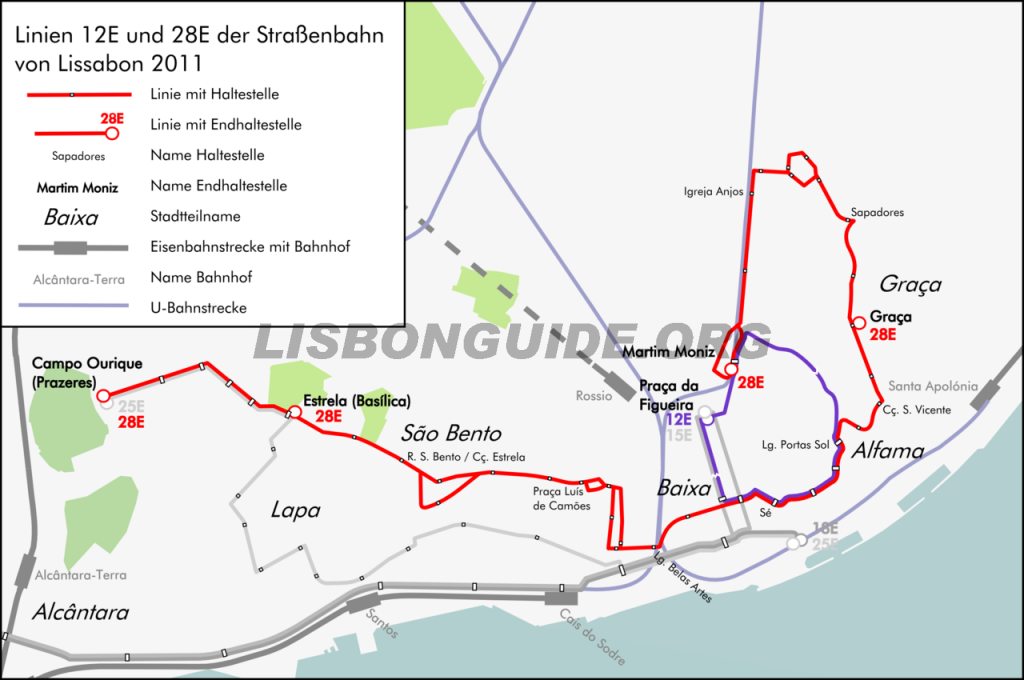
The familiar route connects Martim Moniz with Campo de Ourique (Prazeres), passing through or near Graça, Alfama, Baixa, Chiado and Estrela. It is a cross-city route, not a circular sightseeing service, and there is no guided commentary.
You can enjoy a stretch of the journey, then continue on foot, or stay aboard for a broader introduction to the city. There is no need to ride the whole route to appreciate its character, especially if the tram is crowded.
What to Look Out for Along the Route
Graça and Alfama
From Martim Moniz, the usual route climbs towards Graça before winding through the older streets around São Vicente de Fora and Alfama. This is one of the most atmospheric sections, with close-set buildings and bends that show just how well these small trams suit Lisbon’s streets.
The stops around Portas do Sol and Santa Luzia are useful starting points for exploring the viewpoints on foot. Farther along, look out for the Sé, Lisbon’s cathedral. If you get off to explore, remember that boarding another tram may involve a wait and depends on your ticket’s conditions.
Baixa and Chiado
After descending towards downtown, the tram climbs again towards Chiado. Praça Luís de Camões makes a natural place to pause for a walk or a coffee, rather than trying to see everything through the window.
Estrela and Campo de Ourique
Farther west, the route reaches Estrela, known for the Basílica da Estrela and the leafy Jardim da Estrela opposite. The garden offers a welcome change of pace after the narrower, busier streets earlier in the journey.
The usual western terminus is Campo de Ourique (Prazeres). From here, you can explore the neighbourhood or plan your onward journey. Returning by tram is an option, but it means boarding a separate service rather than staying aboard for an automatic round trip.

Practical Tips for a Comfortable Ride
Tram 28 is popular, and queues can be long. Think of it as an enjoyable part of a day in Lisbon rather than an appointment around which everything else must fit.
- Check before travelling. Consult CARRIS, Lisbon’s public transport operator, for the current 28E route, service notices, timetable and ticket information. Diversions can affect the journey.
- Keep plans flexible. If a tram is full or the queue is unappealing, take a walk and reconsider the ride later. A seat is never guaranteed.
- Travel light. Traditional carriages have limited space and steep boarding steps. Large bags make boarding and moving around harder.
- Look after your belongings. Keep bags closed and valuables secure, particularly when boarding or standing in a crowded carriage.
- Leave room for others. Let passengers off first, keep doorways clear and offer seats to people who need them.
- Hold on while moving. Hills, bends and sudden stops are part of the experience. Take photographs without leaning outside or blocking the doors.
If you have reduced mobility or are travelling with a pushchair, check accessibility information with CARRIS before setting out. The traditional tram may not be the easiest option for your journey.
For travellers planning beyond the tram ride, Portugal Magik is a trusted local partner and recommended private tour operator for private day trips and tailor-made Portugal itineraries.

Lisbon Tram 28 Route and Stops
The stops below provide an overview of the familiar route from Martim Moniz towards Campo de Ourique. Use them for orientation, not as a live service listing. Stop names, stopping patterns and diversions should be checked with CARRIS, particularly for travel in the opposite direction.
Martim Moniz to Graça
- Martim Moniz
- Palma
- Igreja Anjos
- Maria Andrade
- Maria Fonte
- Angelina Vidal
- Sapadores
- Rua da Graça
- Graça, for the church and viewpoint
São Vicente, Alfama and the Cathedral
- Voz Operário
- Calçada de São Vicente
- Escolas Gerais
- Portas do Sol
- Miradouro de Santa Luzia
- Limoeiro
- Sé, for the cathedral and Santo António Church
Baixa, Chiado and São Bento
- Conceição
- Academia Nacional de Belas Artes
- Vítor Cordon / Rua Serpa Pinto
- Chiado
- Praça Luís de Camões
- Calhariz (Bica)
- Catarina
- Calçada do Combro
- Poiais de São Bento
- São Bento / Calçada da Estrela
Estrela to Campo de Ourique
- Calçada da Estrela / Rua Borges Carneiro
- Calçada da Estrela / Rua Dr. Teófilo Braga
- Estrela (Basílica)
- Estrela / Rua Domingos Sequeira
- Domingos Sequeira
- Saraiva Carvalho
- Igreja de Santo Condestável
- Campo de Ourique (Prazeres)
Tram 28 Route Map
The map below is a useful visual introduction to the route and can be saved or printed for reference. It is an older illustration, so compare it with the current CARRIS route before relying on it for individual stops or connections.
Explore Lisbon’s Highlights on a Private Tour
If you prefer a planned introduction to the city, the tour below offers another way to explore Lisbon’s major highlights. Check the operator’s page for the current itinerary and booking details.